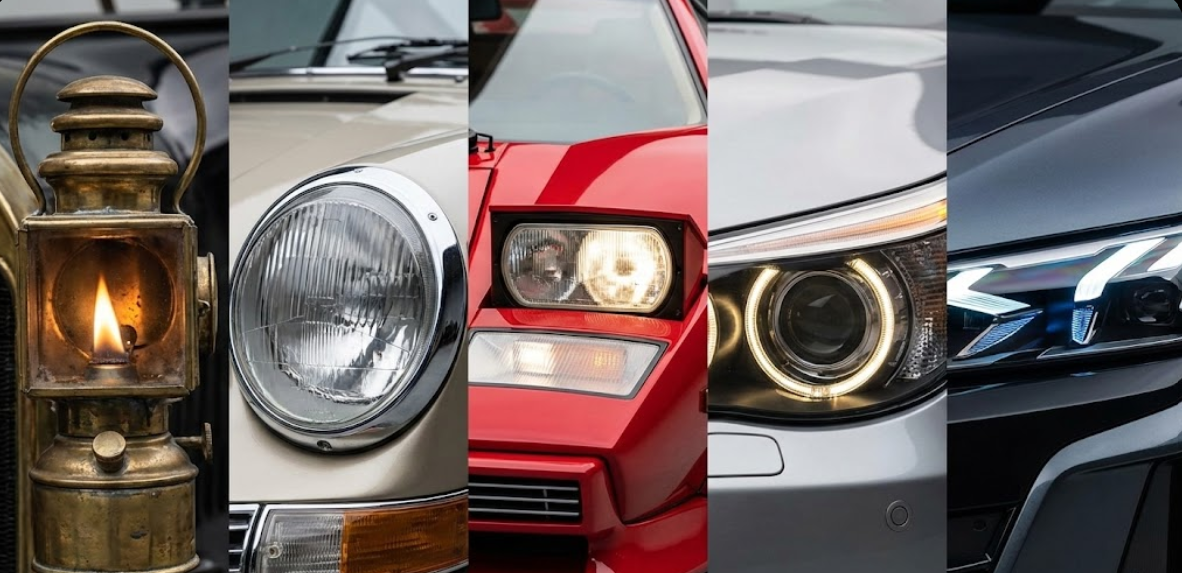
Today, we look at the Headlight. In 2026, your car’s headlights can project navigation arrows onto the road and “mask out” oncoming traffic to prevent blinding other drivers. But it wasn’t always this way. Let’s look at the morphology of automotive light.
The Flickering Start (1880s – 1900s)
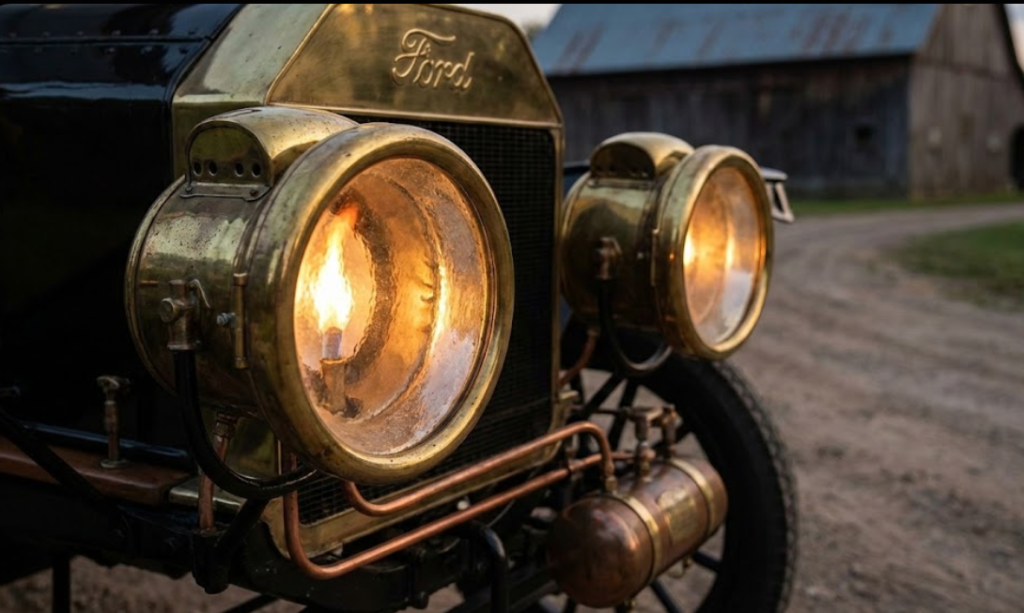
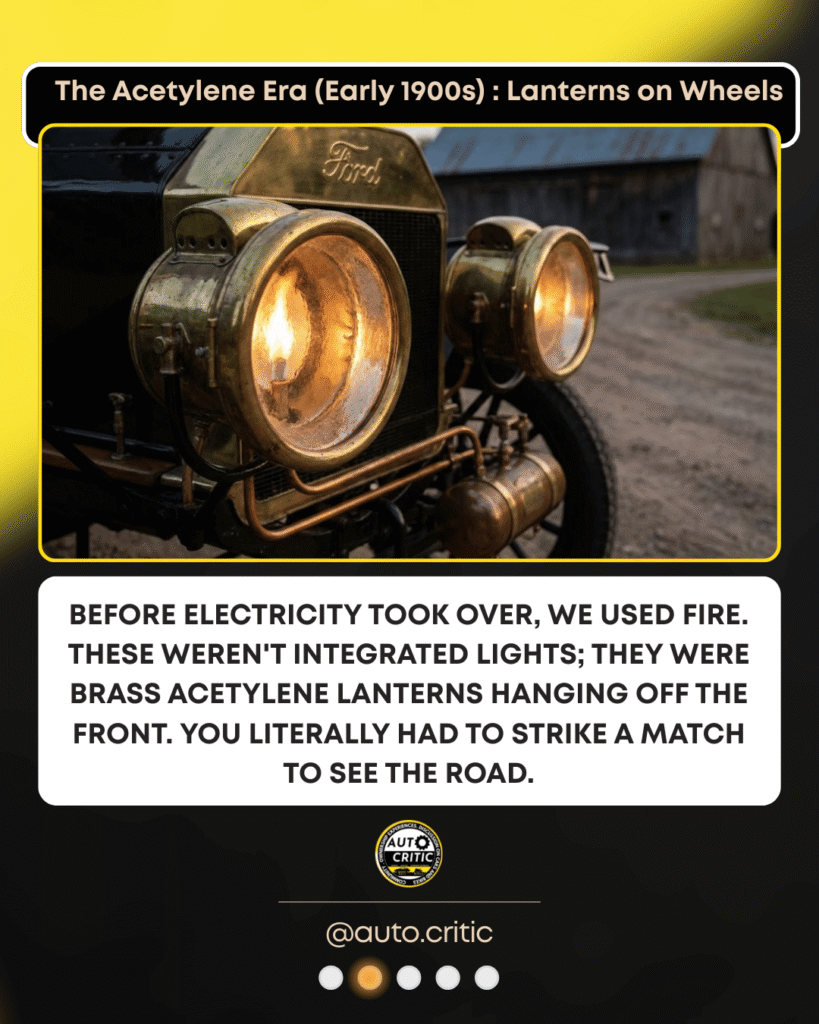
From Candles to Carbide: Before electricity revolutionized automotive design, early cars relied on combustion for illumination. This period, known as the Brass Era, utilized two main types of primitive lighting:
- Oil Lamps: Similar to what you’d find in a barn, these burned kerosene or paraffin. They were dim, flickering, and served only as “positional lights”—warning others of your presence rather than illuminating the road ahead.
- Acetylene (Carbide) Lamps: The high-performance option of 1910. By mixing calcium carbide and water, these lamps produced a brilliant white flame that was significantly brighter than oil.
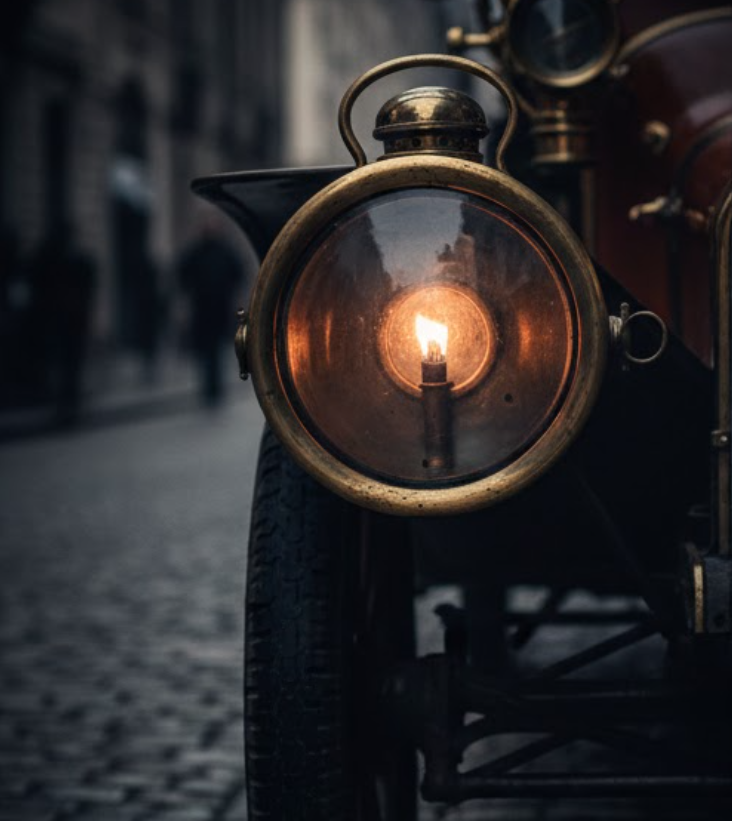
The Realities of Vintage Lighting: Operating these lights was a manual, dangerous process. Drivers faced distinct challenges that are unthinkable today:
Maintenance: The burning gas left behind soot and ash, requiring constant cleaning of the mirrors and lenses to maintain any visibility.
Manual Ignition: Every drive began with a matchbook.
Weather Vulnerability: High winds and rain were the enemies of night driving, often extinguishing the flame instantly.
The Sealed Beam Era: When the Government Designed Your Headlights (1940s – 1970s)
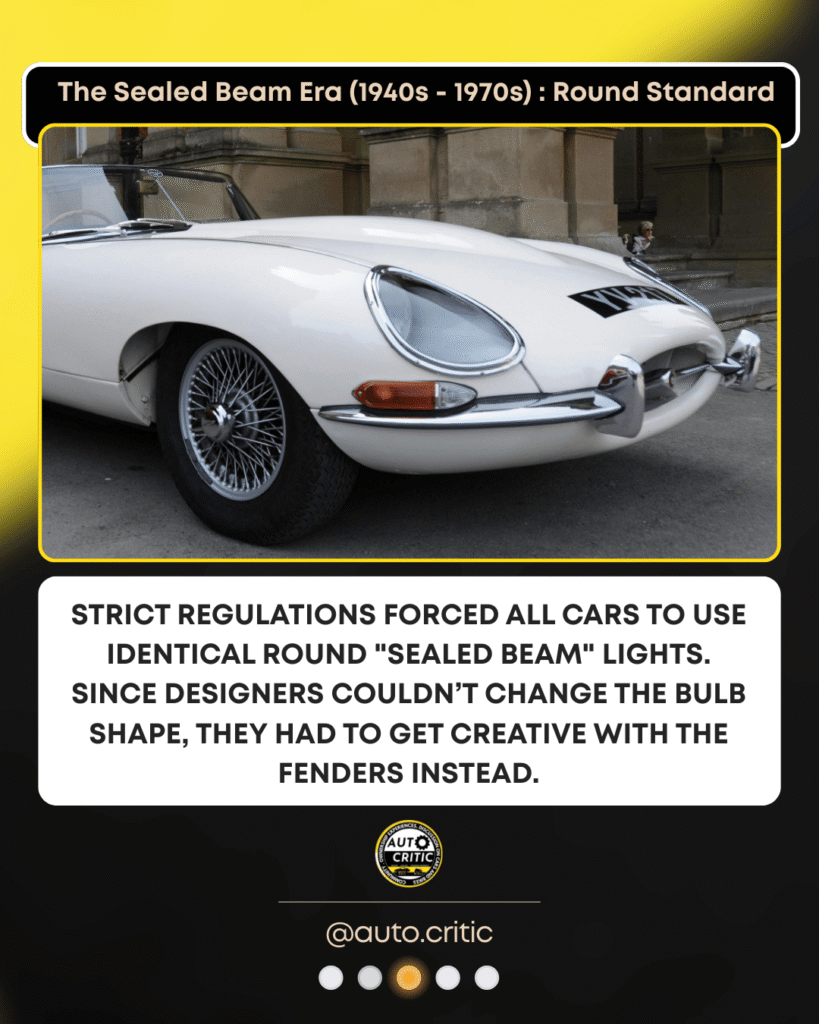
If you look at almost any car produced between 1940 and the late 1970s, you will notice a striking similarity: they all stare back at you with the exact same round eyes. This wasn’t a coincidence or a shared trend among designers; it was the law. This period, often called the “Dark Ages of Automotive Lighting” by designers but the “Golden Age of Simplicity” by mechanics, was defined by the Sealed Beam Mandate.
🚫 The Regulatory Stranglehold Prior to 1940, automakers were experimenting with various electric bulb designs, often with mixed results regarding reliability and brightness. To solve this, U.S. regulators intervened with a heavy hand. In 1940, a standard was set that froze headlight innovation for nearly 40 years. The rule was simple but strict: every vehicle sold in the United States had to be equipped with two 7-inch round sealed beam headlamps. Later, in 1957, the law was tweaked to allow for four smaller (5.75-inch) round lights, giving birth to the “quad headlight” look of the 1960s muscle car era.
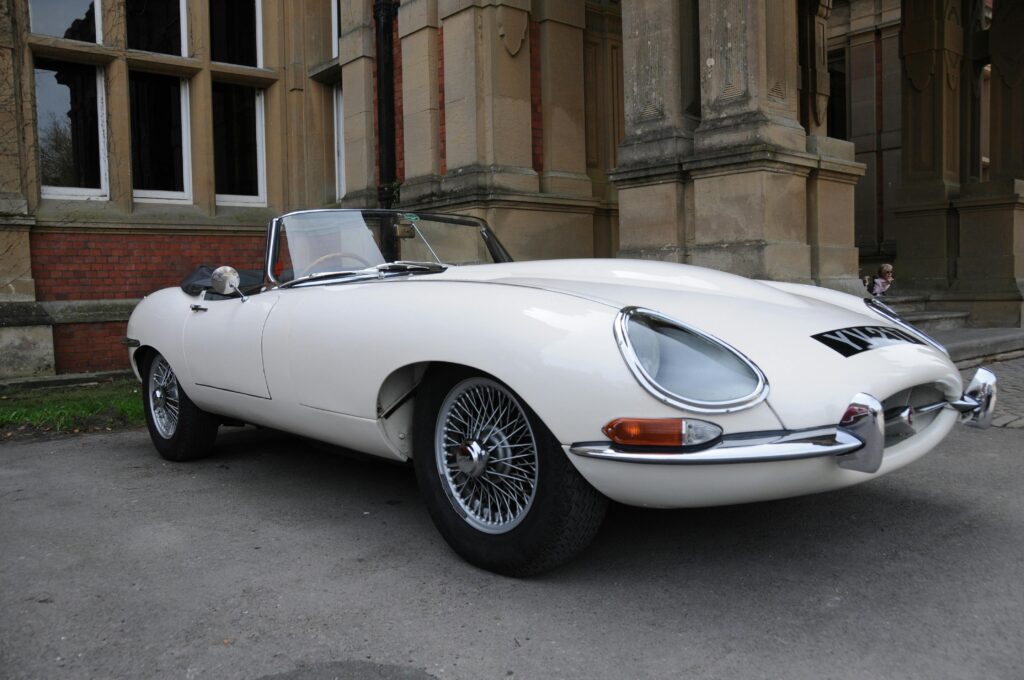
🛠️ The Tech: What is a Sealed Beam? Unlike modern headlights where you can replace just the bulb, a sealed beam unit was a single, fused piece of hardware. The tungsten filament, the parabolic reflector, and the glass lens were all sealed together in a vacuum.
- The Advantage: This design was brilliant for durability. By sealing the unit, moisture and dirt could never enter and tarnish the silver reflector—a common problem in earlier cars that caused lights to dim over time.
- The Downside: If a filament burned out, you couldn’t just swap a cheap bulb. You had to throw the entire glass unit—lens, reflector, and all—into the trash and buy a new one.
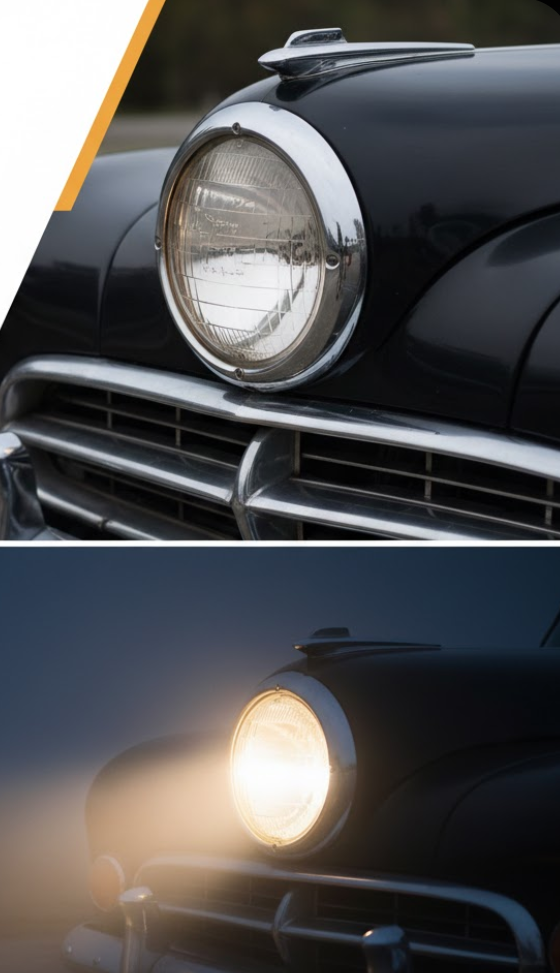
🎨 Design Under Duress: Creativity in Constraints This era is a fascinating case study in industrial design. Imagine being a car designer for Ferrari, Ford, or Jaguar, and being told you must use the exact same lighting hardware as a farm tractor. Because they couldn’t change the shape of the light, designers had to get creative with the surroundings. This constraint birthed some of the most iconic automotive styling cues in history:
- The Jaguar E-Type recessed the lights into the fenders covered by glass (until regulations banned the glass covers too!).
- The 1969 Dodge Charger hid the lights behind a “phantom grille” to maintain a menacing, unbroken look.
- The Porsche 911 stood the lights upright in prominent “torpedo tubes” that defined the car’s silhouette for decades.
The Legacy While the technology was primitive—yellowish halogen light that barely penetrated the dark compared to modern LEDs—the Sealed Beam Era created the “face” of the classic car. Today, restorers and enthusiasts often fight to keep these original glass units rather than upgrading to modern tech, simply to preserve that authentic, warm vintage glow.
The Rectangular Revolution & The Golden Age of Pop-Ups (1980s – 1990s)
If the previous era was defined by government restriction, this era was defined by aerodynamic liberation. For nearly 40 years, car designers were handcuffed to round lights. But in 1974, a quiet amendment to U.S. Federal Motor Vehicle Safety Standard 108 changed everything: Rectangular headlamps were finally legal.
📐 The Shift to “The Wedge” This regulatory change triggered an immediate design revolution. The “Wedge Era” was born. Suddenly, cars didn’t need high, bulbous fenders to house round lights. The new rectangular sealed beams allowed for significantly lower, flatter hood lines. This coincided perfectly with the industry’s obsession with aerodynamics during the oil crisis years. You can see this shift instantly in cars like the C4 Corvette, the DeLorean DMC-12, and the squared-off sedans of the 80s like the Volvo 740. The curves of the 60s evaporated, replaced by sharp creases, ruler-straight lines, and a futuristic, boxy aesthetic that defined a generation.
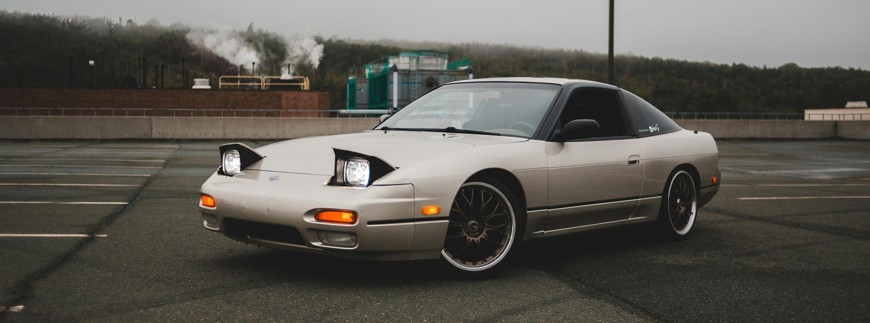
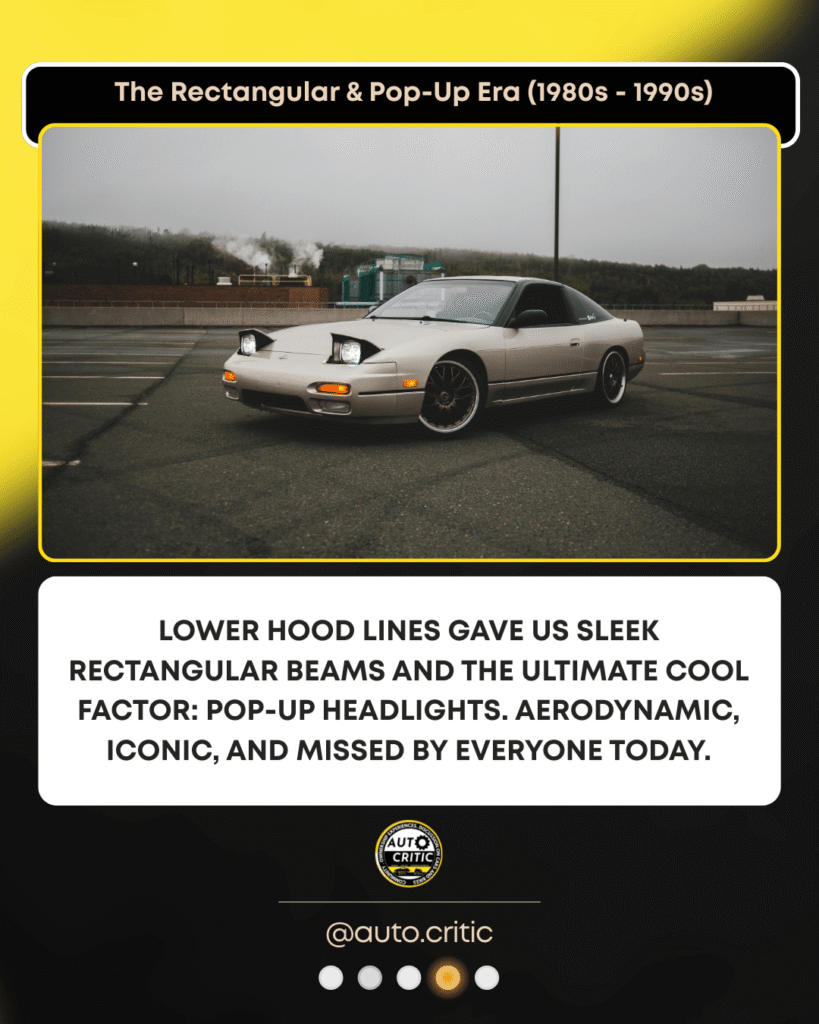
👀 The Pop-Up Headlight Phenomenon While rectangular lights were practical, pop-up headlights (technically called “hidden headlamps”) became the ultimate emotional symbol of this era. They weren’t just a style choice; they were an engineering hack. Sports cars like the Lamborghini Countach, Ferrari Testarossa, and Mazda RX-7 were designed to slice through the air with incredibly low noses. However, headlight regulations required lamps to be at a certain height above the ground—a height that would ruin the car’s aerodynamic profile. The Solution: Hide the lights inside the bodywork. When the lights were off, the car was a sleek, aerodynamic knife. When turned on, mechanical motors would flip the “buckets” up, meeting the legal height requirement.
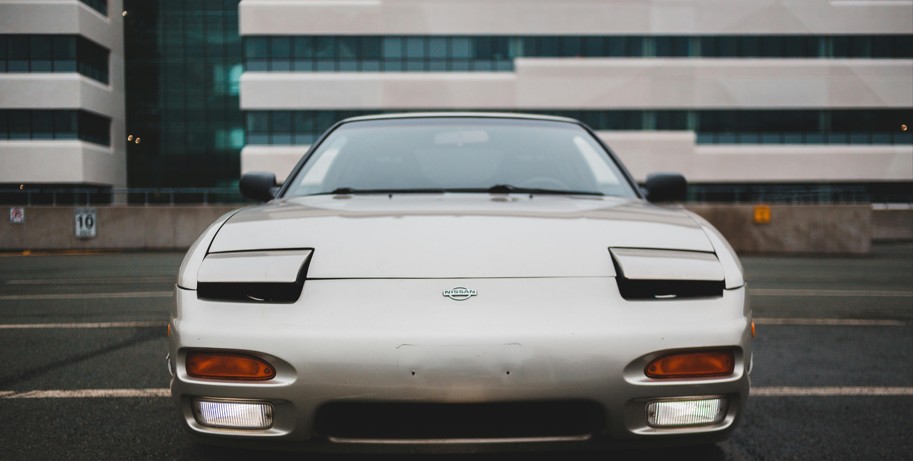
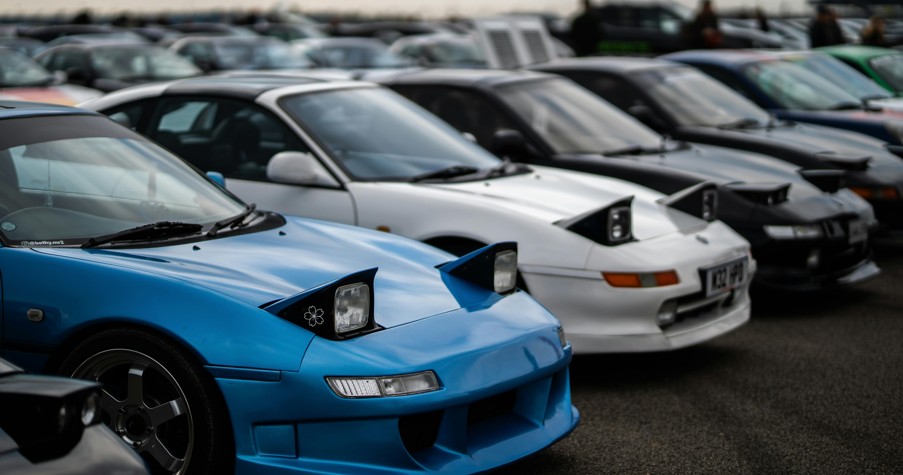
⚙️ Mechanical Charisma There is a tactile, mechanical soul to this era that modern cars lack. Turning on the lights wasn’t just a digital signal; it was an event. Drivers could hear the whirrr-thunk of the electric motors engaging. This feature gave cars a human-like personality. The first-generation Mazda Miata (NA) is legendary specifically because its pop-ups make the car look like a happy, surprised face. This “sleepy eye” look is now a massive subculture in the JDM (Japanese Domestic Market) car scene.
The Tragic End So, where did they go? Sadly, pop-up headlights were killed not by fashion, but by pedestrian safety regulations. In a collision, rigid, protruding metal light housings were deemed too dangerous for pedestrians. By the early 2000s, the pop-up was extinct (the C5 Corvette and Lotus Esprit being among the last survivors), marking the end of the most expressive era in automotive lighting history.
The Projector & HID Era: The Birth of the “Glass Eye” and the Blue Beam (2000s – 2010s)
If the 80s were about shape, the 2000s were about science. For over a century, cars relied on a simple concept: electricity heating a tungsten filament until it glowed. It was reliable, but it was inefficient and yellow. Enter the new millennium, and with it, a technology borrowed from stadium floodlights and IMAX theaters: High-Intensity Discharge (HID), commonly known as Xenon.
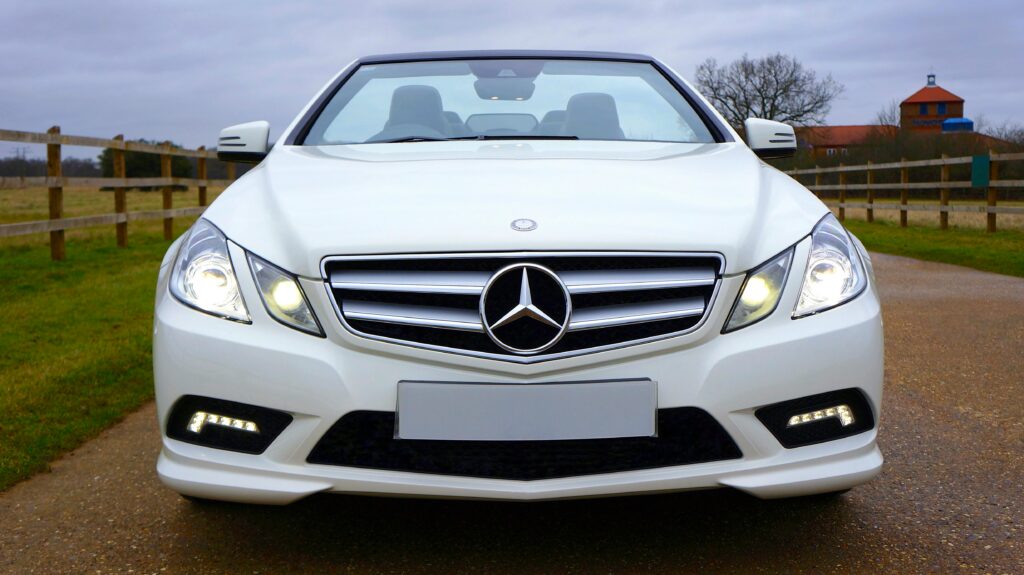
⚡ The Tech: From Filament to Plasma The shift to HID was a quantum leap in automotive engineering. Unlike standard halogen bulbs, Xenon lights have no filament to burn out. Instead, they operate like a welding arc or a lightning bolt. A high-voltage ballast sends a massive jolt of electricity jumping between two electrodes inside a glass tube filled with Xenon gas. The result? A brilliant, intense white-blue plasma light that was three times brighter than halogen while consuming less power. For drivers used to dim, yellow candles, turning on HIDs for the first time felt like bringing daylight into the night. It wasn’t just an upgrade; it was a revelation in safety and visibility.
👁️ The “Glass Eyeball” Look: Projectors vs. Reflectors This immense power required a new way to control the beam. You couldn’t just stick a Xenon bulb into an old mirrored bowl; it would blind everyone on the road (a lesson many aftermarket modders learned the hard way). To harness this intensity, engineers popularized the Projector Lens. Instead of bouncing light off a reflector, the light was focused through a thick, convex glass lens—looking exactly like a glass eyeball or a camera lens. This created the distinctive “sharp cutoff” line. If you drove a car from this era, you remember seeing that razor-sharp line of light dancing on the bumper of the car ahead of you. It allowed low beams to be incredibly bright without glaring into the eyes of oncoming traffic.
😇 The “Angel Eye” Cultural Shift This era also birthed the concept of the headlight as a “Brand Signature.” The pivotal moment occurred in 2001 with the launch of the BMW 5 Series (E39). BMW designers introduced “Corona Rings,” colloquially known as Angel Eyes. These were fiber-optic glowing rings that circled the dual headlamps. Suddenly, you didn’t need to see the badge to know a BMW was behind you; you knew it by the eyes. This changed the industry forever. Before the E39, headlights were purely functional. After the E39, headlights became the “jewelry” of the car. It sparked an arms race of Daytime Running Lights (DRLs) that continues to this day, where every manufacturer fights to create the most recognizable light signature on the road.
The Blue Status Symbol We cannot talk about this era without mentioning color temperature. The cool, icy blue hue (usually 4300K to 6000K) of Xenon lights became an instant status symbol. It signified “luxury” and “tech.” It was so desirable that an entire industry of “blue tinted” fake halogen bulbs exploded, just so economy car owners could mimic the expensive stare of a Mercedes or Audi.
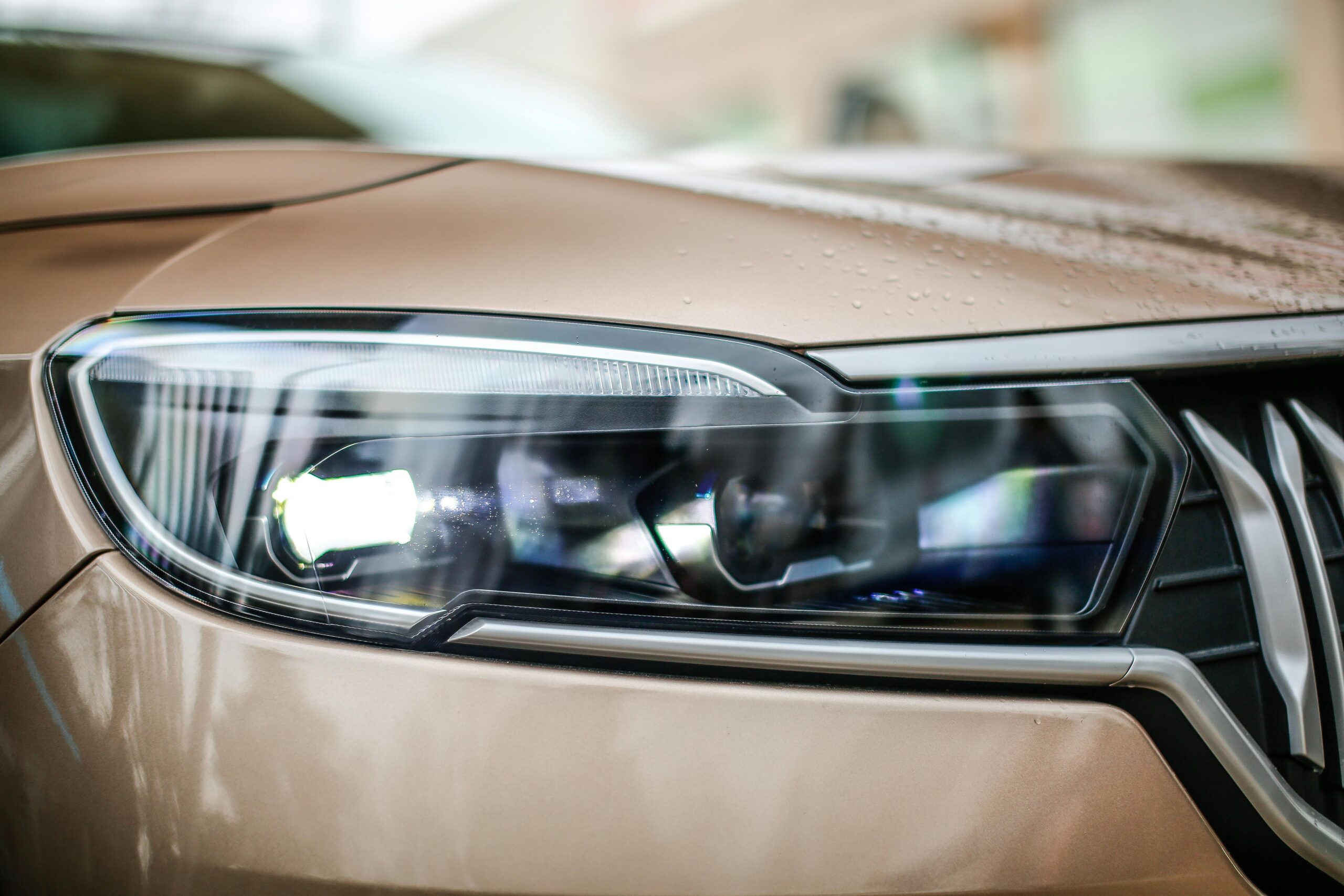
2026: The Era of the Intelligent Beam
We have now arrived at the current pinnacle of automotive lighting. If the previous phases were about better light, this phase is about intelligent light. The invention of the white Light Emitting Diode (LED) didn’t just upgrade the car headlight; it completely reinvented it from a functional car part into a piece of digital theater.
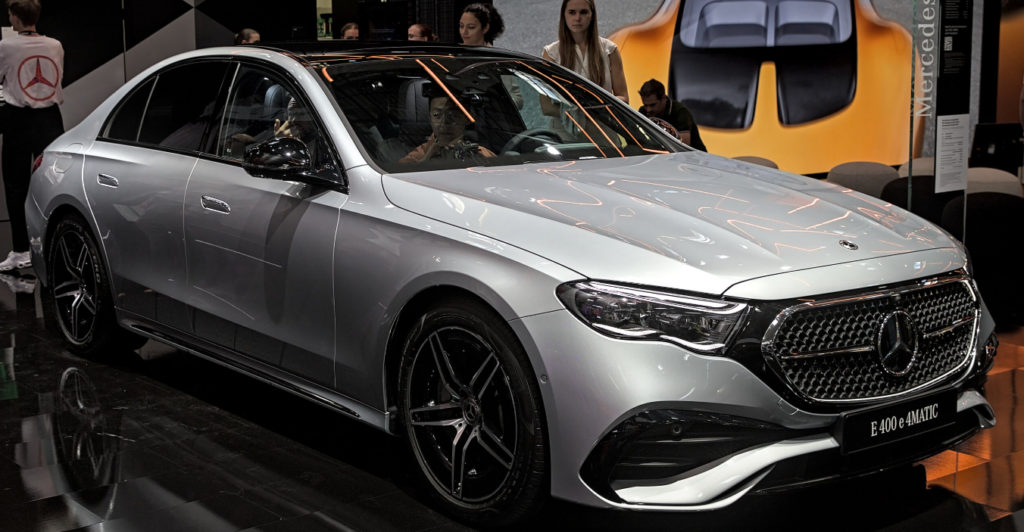
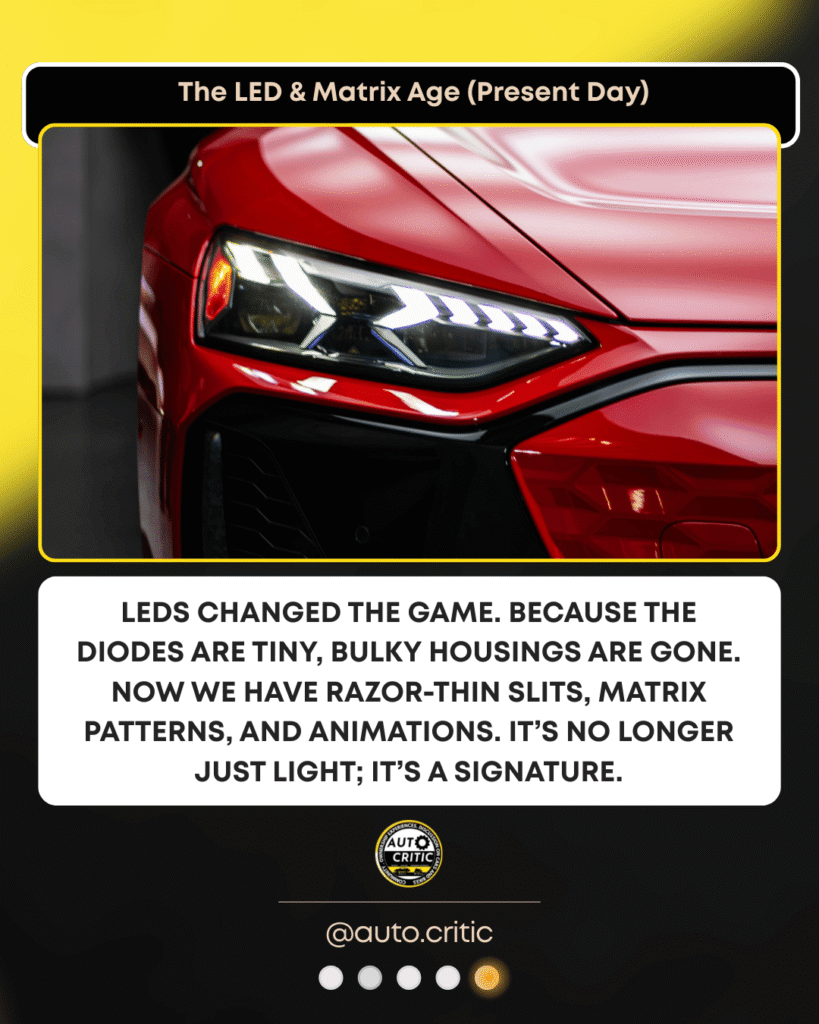
🧬 The Tech: The Death of the Bulb For the first time in history, the “bulb” is dead. LEDs are semiconductors—tiny computer chips that emit light when electrified. Because these diodes are microscopic compared to a glass bulb, the physical constraints that shackled designers for 100 years have vanished. Gone are the large, deep housings required for reflectors and projectors. In their place, we have razor-thin slits, intricate geometric patterns, and “light bars” that span the entire width of the car. This technology has allowed electric vehicles (EVs) to adopt smooth, grille-less faces where the lights themselves provide the car’s entire visual identity.
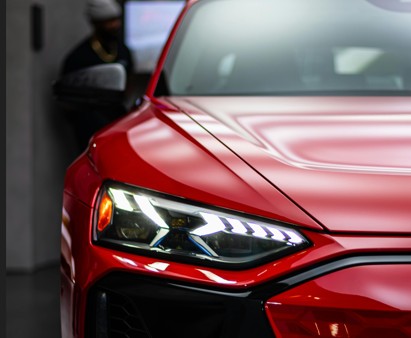
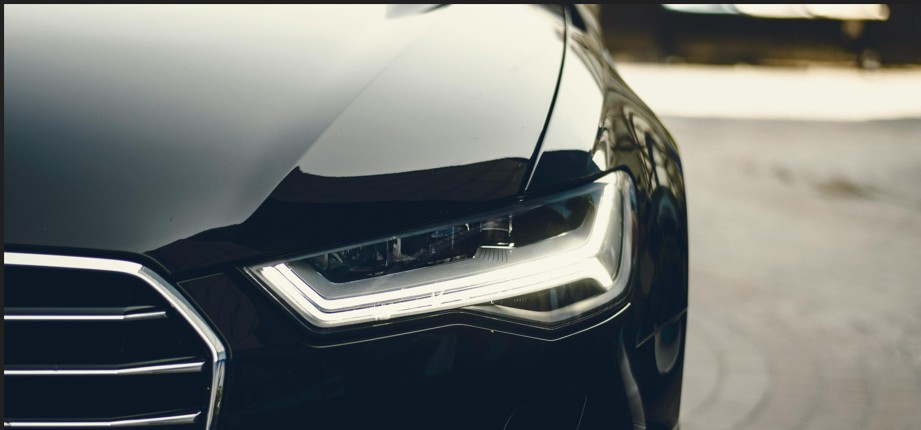
🧠 The Matrix Revolution: Shadow Boxing with Light The most mind-blowing innovation of this era is Matrix LED technology (pioneered largely by Audi). In the past, high beams were a binary choice: On or Off. If a car approached, you had to dim them. Matrix headlights are composed of dozens (or thousands) of individual pixels. When the car’s camera detects oncoming traffic, it doesn’t dim the light; it selectively turns off only the specific pixels hitting the other car. It literally “paints” a shadow around the other vehicle while keeping the rest of the road bathed in high-beam brightness. It is active, real-time light sculpting that feels like magic.
🎭 Animation & Communication Headlights are no longer static. They are communicative. Walk up to a modern Audi RS e-tron GT or a Mercedes-Benz EQS, and the car greets you. The lights perform a complex “welcome dance,” sweeping and shimmering like a digital organism waking up. This isn’t just for show. We are moving toward Digital Micromirror Devices (DMD), where headlights can actually project symbols onto the road—snowflakes to warn of ice, construction signs, or guide lines to show the width of the car through a narrow gap.
✨ The Brand Signature Today, you don’t need to see a logo to identify a car at night; the “Light Signature” tells you everything. The “Thor’s Hammer” on a Volvo, the “Four-Point” square on a Porsche, or the continuous light bar on a Rivian—these are trademarks. Automakers now spend millions designing the DRL (Daytime Running Light) because, in the LED era, light is the new chrome.
The AutoCritic Verdict: From “Seeing” to “Sense”
The shape and tech of a headlight tell us where the industry is going. We’ve moved from seeing the road to sensing the environment. The headlight is no longer just a lamp; it’s an active safety assistant. The shift from Acetylene to Matrix LED isn’t just about brightness; it’s about intelligence. We have moved from a world where we used lights to see the road, to a world where our lights sense the environment for us. The headlight has evolved from a dumb bulb into an active safety shield.
What car part should we dissect next in our Morphology Series? The steering wheel? The door handle? Let us know in the comments below!