
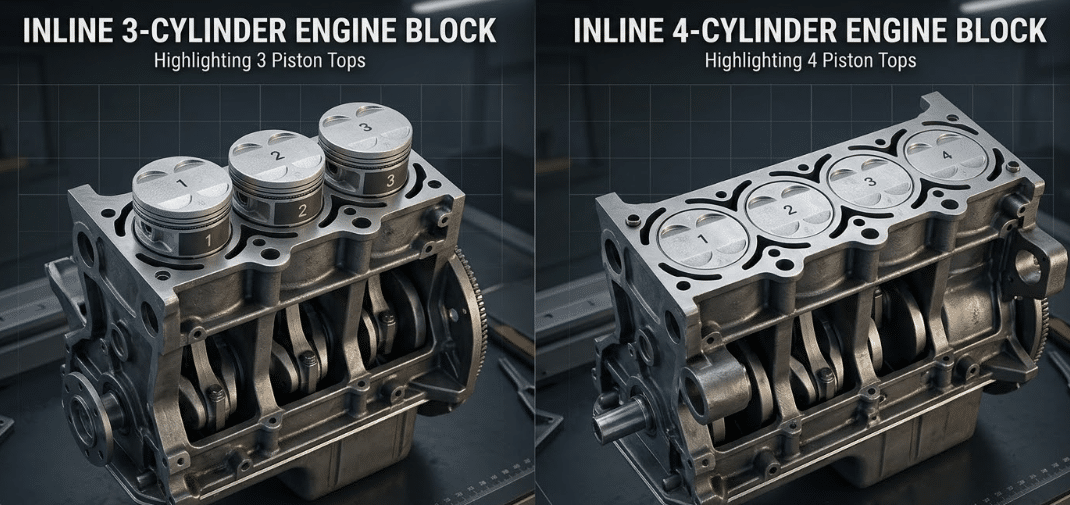
The automotive landscape in India is witnessing a fascinating shift. While 4-cylinder engines have long been the standard, we’re seeing an explosion of 3-cylinder engines, especially in popular hatchbacks, compact sedans, and even sub-compact SUVs. This isn’t just a coincidence; it’s a strategic move driven by evolving emission norms and the need for better fuel efficiency. But which one reigns supreme for Indian drivers? Autocritic.in is here to break down the technicalities and real-world implications, helping you navigate this crucial decision.
The Heart of the Matter: Demystifying the Working Principles
To understand the difference, we first need to grasp the fundamental working of an internal combustion engine. At its simplest, it’s about little explosions happening inside cylinders, pushing pistons, and ultimately turning the wheels. Both 3-cylinder and 4-cylinder engines operate on the same core principle: the 4-stroke cycle.
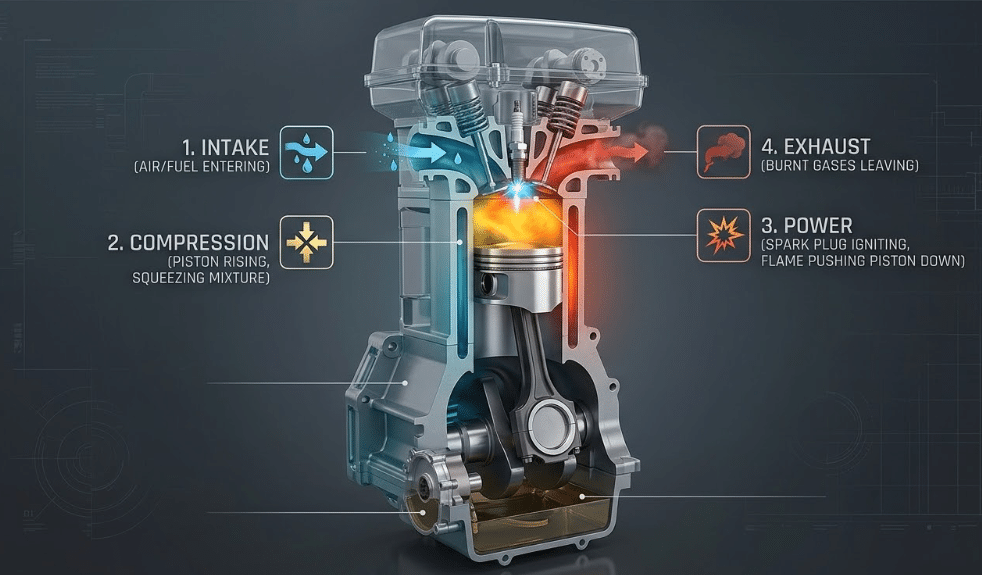
The distinction lies in how many of these cycles are happening simultaneously. In a 4-cylinder engine, the cycles are perfectly staggered. When one cylinder is on its power stroke, another is compressing, another is exhausting, and another is taking in fresh air and fuel. This synchronous operation leads to smoother power delivery and less inherent vibration.
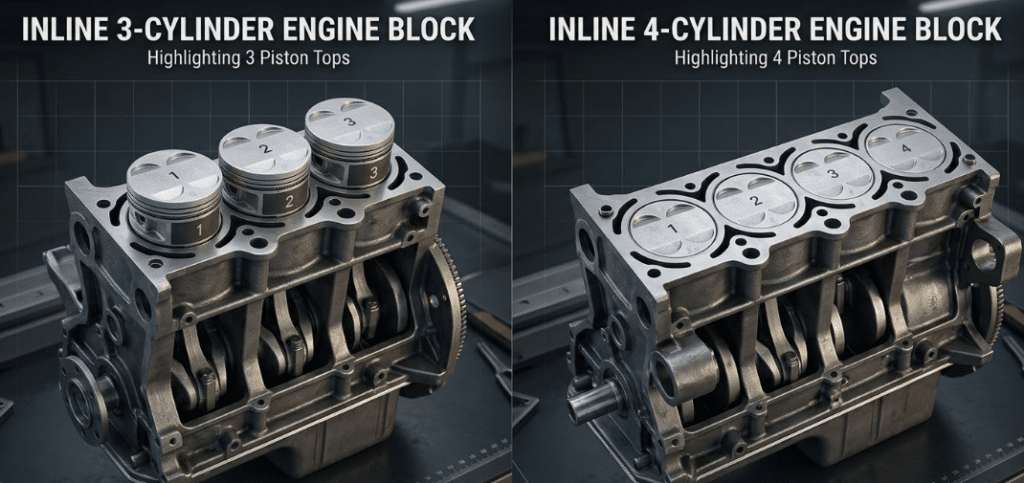
A 3-cylinder engine, with one less cylinder, has a naturally unbalanced firing order. Imagine four dancers perfectly synchronized versus a trio with slightly different timings. The power strokes in a 3-cylinder are further apart (240 degrees of crankshaft rotation vs. 180 degrees in a 4-cylinder). This physical reality means more noticeable vibration—that “odd” thrum or hum you feel, especially at idle or low engine speeds.
The Rise of the Triple: Taming the Vibration and Finding the Punch
So, if 4-cylinders are naturally smoother, why are 3-cylinders becoming so popular? It’s a classic case of engineering innovation meeting practical demands. The main drivers are:
- Downsizing & Turbocharging: In response to stricter emission standards (like BS6 Stage 2 in India), manufacturers are reducing engine size (displacement). They compensate for the lost displacement by adding a turbocharger, which forces more air (and therefore more oxygen for combustion) into the cylinders, boosting power dramatically.
- Increased Efficiency: A smaller engine with fewer moving parts has less internal friction. Friction is energy lost as heat, so less friction means better fuel economy, a major selling point in India.
- Cost & Weight Savings: Fewer cylinders mean fewer pistons, connecting rods, valves, and spark plugs. This can make 3-cylinder engines cheaper to manufacture and lighter, potentially lowering the car’s price and improving overall vehicle dynamics.
But how do they manage the vibration?
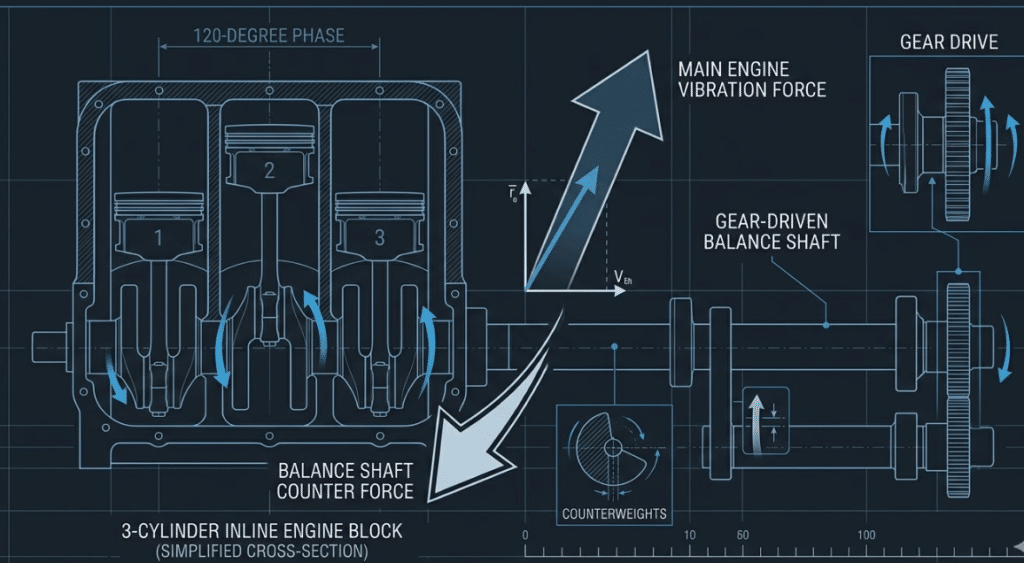
- Balance Shafts: Engineers integrate a counterweighted shaft that spins opposite to the engine’s main components. This shaft creates its own vibration that precisely cancels out much of the primary imbalance of the three cylinders. It’s an elegant, but complex solution.
- Improved Engine Mounts: More sophisticated, often hydraulic or fluid-filled, engine mounts are used to effectively isolate the engine’s shaking from the rest of the car, keeping the cabin significantly smoother.
- Variable Valve Timing (VVT) and Direct Injection: These modern technologies further optimize the combustion process for better performance and smoother operation throughout the rev range, making that “odd” thrum less intrusive.
Battle Royale: The Indian Chapter
Let’s look at the real-world advantages and disadvantages of each configuration in the unique context of Indian driving conditions.
The 3-Cylinder Engine (The Efficient City Prowler)
Example Vehicles: Tata Nexon, Hyundai Venue 1.0L Turbo, Maruti Fronx/Baleno 1.0L Boosterjet, Nissan Magnite, Renault Kiger
Advantages in India:
- KMPL King: Generally, small-displacement 3-cylinder engines are the masters of squeezing out maximum kilometers per liter (KMPL), a massive plus for budget-conscious Indian buyers navigating dense city traffic and rising fuel prices.
- Compact Powerhouse: Thanks to turbocharging, these engines deliver surprisingly punchy performance, especially in the mid-range. That initial surge of power when the turbo activates is great for quick city overtakes.
- Ideal for City Duties: Their generous low-end torque (pulling power) makes them great for navigating the stop-and-go chaos of Indian metropolises.
- Often More Affordable: Cars equipped with smaller 3-cylinder engines typically fall into lower tax brackets, making the initial purchase price more competitive.
Disadvantages in India:
- Not as Smooth: While much better now, they retain that characteristic thrum and vibration, especially when idling at a traffic light or at low RPMs. This is the main compromise in refinement.
- Complexity: The combination of turbochargers, balance shafts, and high-pressure fuel pumps makes these engines complex. This can lead to potentially specialized maintenance needs and parts availability questions as they age.
- Top-End Limitations: While quick initially, smaller turbocharged 3-cylinders can feel strained at higher speeds (think highway cruising at 100+ km/h), where their performance might not match that of a larger 4-cylinder.
- Turbo Lag: There can be a slight delay in power delivery (turbo lag) when you step on the gas, particularly at very low engine speeds before the turbocharger spins up, which requires slightly different driving habits.
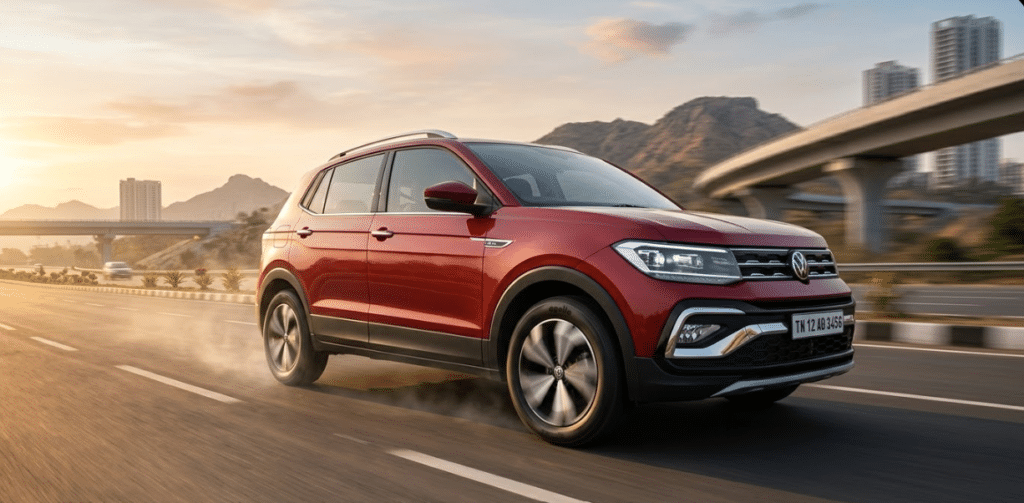
The 4-Cylinder Engine (The Refined Cruiser)
Example Vehicles: Maruti Swift/Grand Vitara 1.5L, Hyundai Creta 1.5L, Skoda Kushaq/VW Taigun 1.5L TSI
Advantages in India:
- Superior Smoothness and Refinement: This is the clear winner in terms of refinement. The inherent balance means less noise, vibration, and harshness (NVH) reaches the cabin, providing a quieter and more premium feel.
- Effortless Top-End Performance: With larger displacement and better flow at high RPMs, 4-cylinder engines offer more robust and less strained performance for confident highway cruising and high-speed overtakes.
- Linear Power Delivery: Naturally aspirated (non-turbocharged) 4-cylinders (like Maruti’s K-series) have a smooth, predictable power curve. Even turbocharged 4-cylinders often feel more linear than their 3-cylinder equivalents.
- Simplicity and Proven Reliability: In India, simple, naturally aspirated 4-cylinders are considered “fail-proof” and have massive parts availability, making them extremely reliable and inexpensive to maintain.
Disadvantages in India:
- Generally Less Fuel Efficient: With similar displacement, 4-cylinders usually consume more fuel than modern “triples” due to increased internal friction and often a heavier overall engine weight.
- Heavier: The additional components increase the engine’s weight, which can dull initial acceleration and slightly affect the car’s weight distribution and handling.
- Higher Tax Brackets: Larger 4-cylinder engines often push vehicles into higher tax brackets in India, leading to increased final road prices.
The autocritic.in Verdict: Which One Should You Choose?
As we’ve seen, neither engine configuration is inherently “better”; it all comes down to your personal priorities and driving needs in India.
- Choose the 3-Cylinder If: Your priority is maximum fuel efficiency, you mostly drive within the city (e.g., a 80/20 mix), you enjoy that initial turbo kick, and a slight vibration at idle doesn’t bother you. Many compact cars and SUVs in the 8–15 lakh range often utilize this setup effectively.
- Choose the 4-Cylinder If: You prioritize smoothness, refinement, and a quiet cabin. You frequently drive on highways (e.g., a 60/40 mix), value predictable and sustained power delivery, and want a more robust feel at higher speeds. This is common in premium hatchbacks and mid-size SUVs starting from 15 lakhs.
Ultimately, the best way to make this decision is through a test drive. Autocritic.in strongly recommends spending time behind the wheel of cars with both engine types, especially in the conditions you’ll face daily. Notice the smoothness when stopped, the power delivery, and the sound. Your perfect engine is the one that fits your budget and lifestyle, making every drive in India a pleasant experience.
Stay tuned to Autocritic.in for more in-depth mechanical breakdowns, honest car reviews, and data-driven insights to help you make the most informed automotive decisions in India!