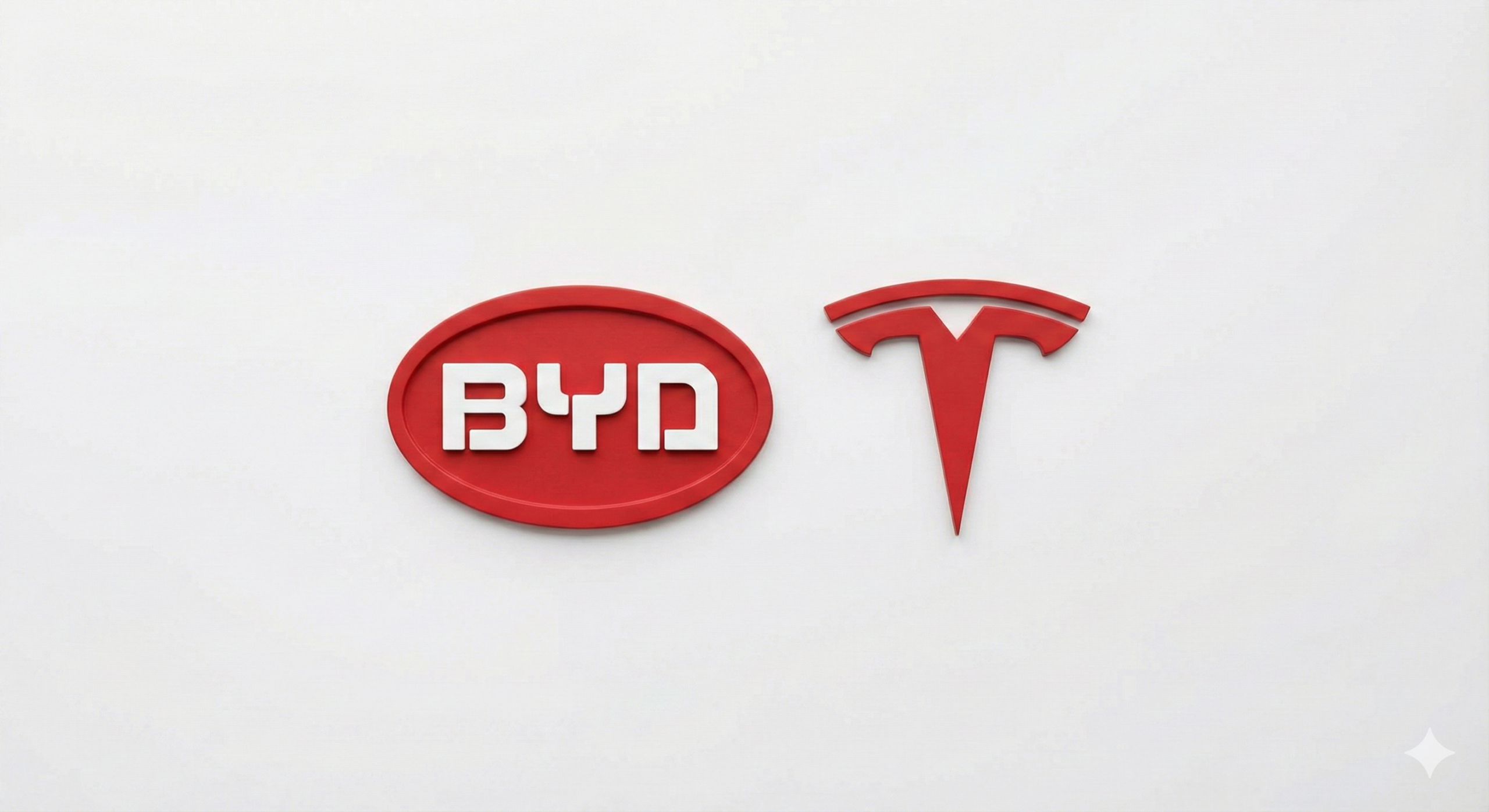
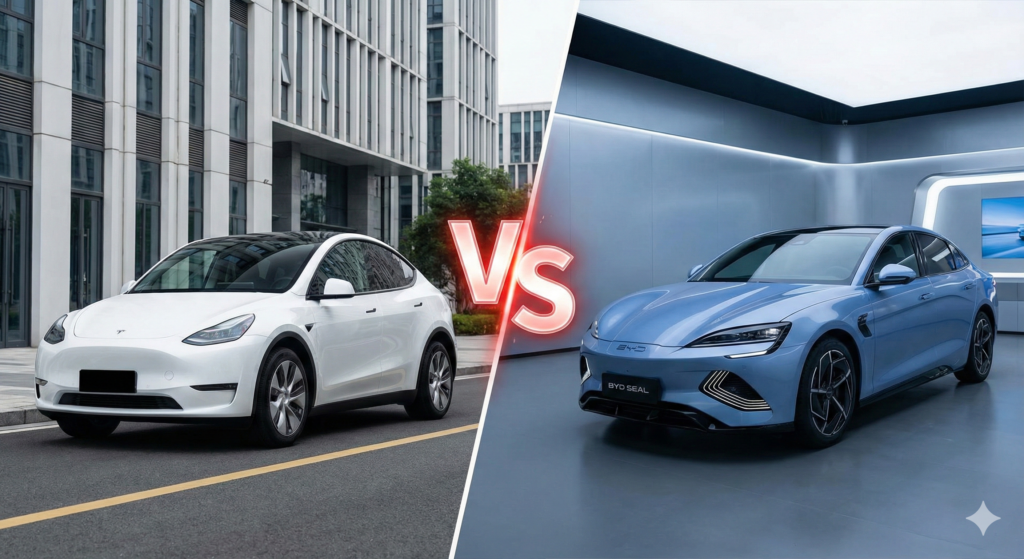
The king is dead; long live the king. For years, Tesla was synonymous with “Electric Vehicle.” If you bought an EV, you bought a Tesla. But the numbers for 2025 are finally in, and the crown has officially been passed. BYD (Build Your Dreams) has surpassed Tesla in global EV sales, delivering a staggering 2.26 million battery electric vehicles (BEVs) compared to Tesla’s 1.64 million.
This isn’t just a blip; it’s a paradigm shift. At AutoCritic, we analyzed the data to understand how a battery company from Shenzhen beat the Silicon Valley giant at its own game.
Why Tesla Slipped in 2025
2025 was a brutal year for Elon Musk’s company. With the removal of critical US tax credits in September and the Model Y starting to show its age against fresher competition, growth stalled. Tesla saw a 9% year-on-year decline, a rare stumble for a company used to exponential growth.
How BYD Won the War
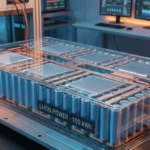
It comes down to one word: Blade. BYD’s proprietary Blade Battery technology allowed them to build safer, cheaper cars like the Seagull, which sells for under $12,000 (approx. ₹10 Lakh) in China—a price point Tesla simply couldn’t touch.
While Tesla focused on “Robotaxis” and AI, BYD flooded the market with variety. From the budget-friendly Dolphin to the premium Seal, they had a car for every wallet. Their aggressive expansion into Europe and Southeast Asia also paid off, proving that the world was hungry for affordable EVs, not just luxury tech toys.
AutoCritic Verdict
Is the Tesla dominance era over? Not necessarily. With the rumored Model 2 slated for late 2026, Tesla could fight back. But for now, the EV world has a new leader, and it wears a “Made in China” badge.