Stop scrolling. Forget everything you know about “futuristic” EV interiors. While Tesla and Mercedes are busy turning car dashboards into home cinemas, Ferrari just did something radical. They went backwards.
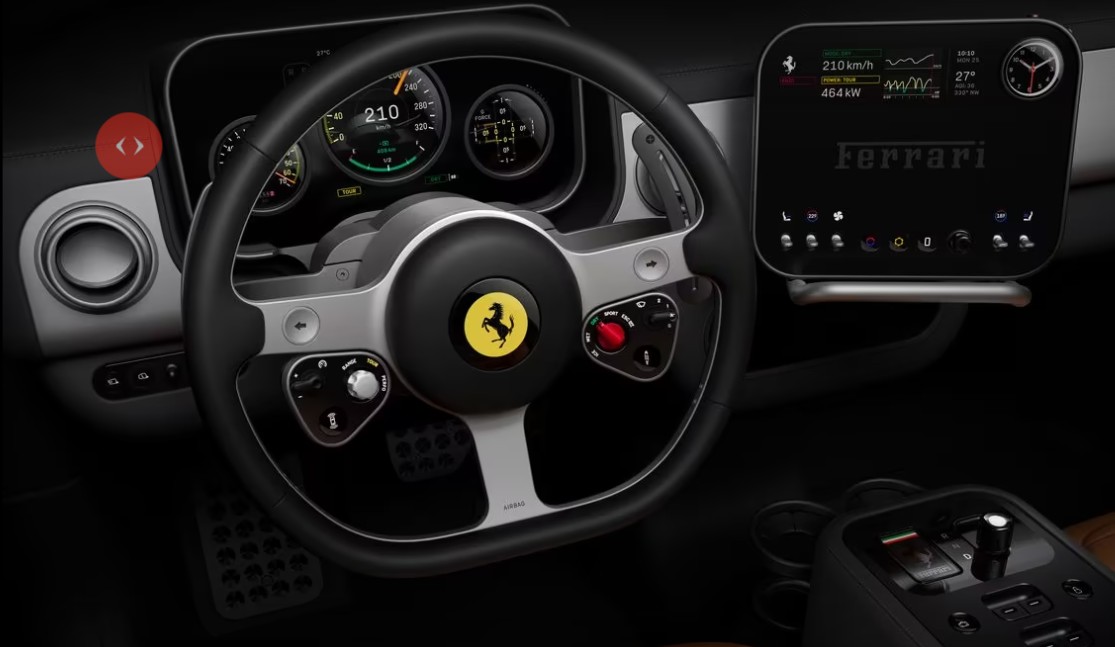
Today, Maranello finally pulled the covers off the interior of their first-ever electric hypercar, the Ferrari Luce. And the headline isn’t the 1,000+ horsepower or the electric motors. It’s the fact that former Apple design chief Sir Jony Ive has designed a cockpit that hates touchscreens and loves physical, clicky buttons.
Here is why the Ferrari Luce interior is the biggest design disruption of 2026.
🍎 The Apple Connection: LoveFrom Meets Maranello
This interior is the brainchild of LoveFrom, the creative collective led by Jony Ive (the man who designed the iPhone). But ironically, instead of giving us a giant iPad on wheels, Ive has gone analogue.
Ferrari’s message is clear: Screens are for scrolling, buttons are for driving.
🕹️ The 3 Killer Features of the Luce Cockpit
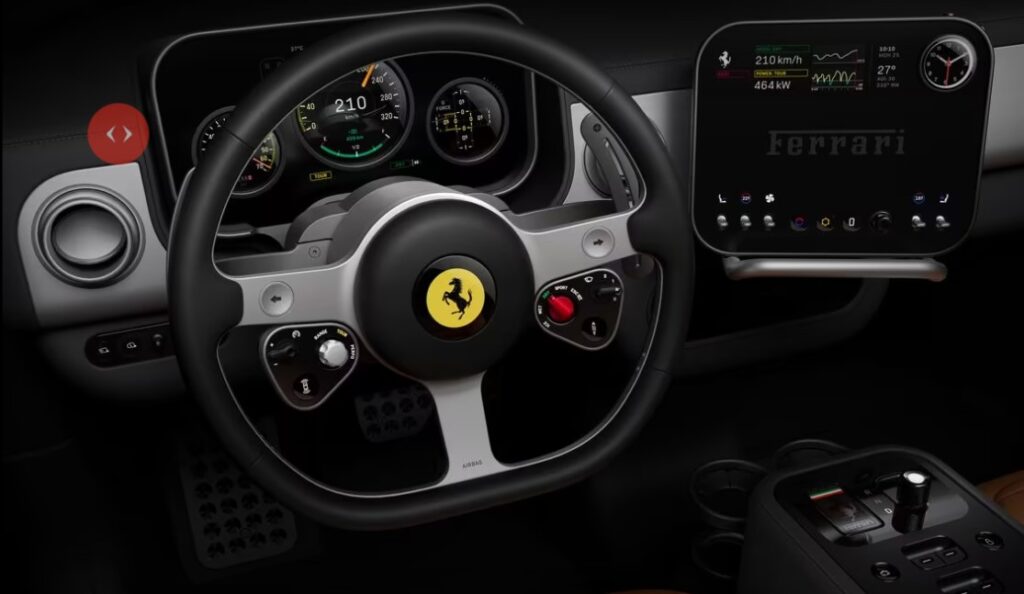
1. The “Nardi” Steering Wheel (No Haptic Nonsense!)
Thank the car gods. The Luce ditches the frustrating haptic touchpads of the 296 GTB.
- The Look: A slim, three-spoke recycled aluminum wheel inspired by the wooden Nardi wheels of the 1960s Ferraris.
- The Feel: Real, physical buttons for indicators and wipers. The Manettino dial is back as a proper physical switch. It weighs 400g less than a standard wheel and feels like pure motorsport.
2. The “Theatre” of the Start
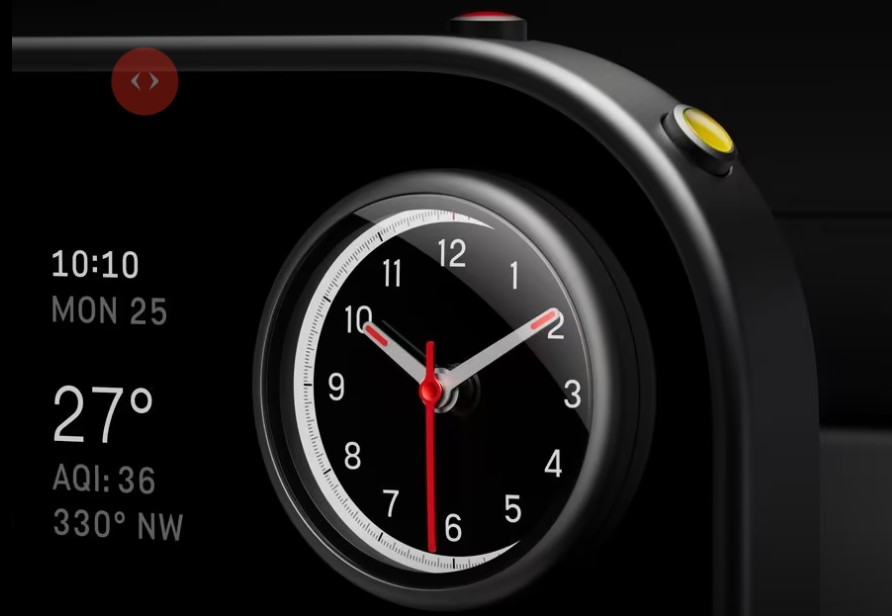
Starting an EV is usually boring—you just push a plastic button. Not here.
- The Key: The key fob is made of Corning Fusion5 Glass and features an E-Ink display.
- The Ritual: You physically dock the glass key into the center console. As it clicks in, the E-Ink turns from yellow to black, and the car “wakes up.” It’s pure theatre, designed to replace the drama of an engine roaring to life.
3. The “Helicopter” Launch Control
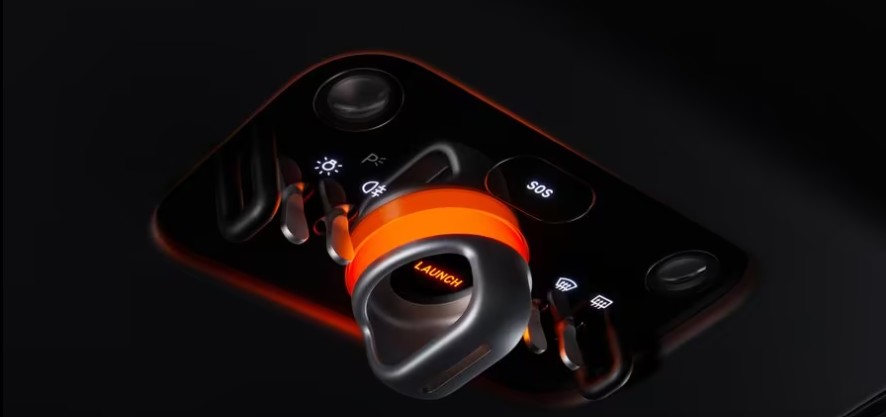
This is my favorite feature. The Launch Control isn’t buried in a sub-menu. It is a physical pull-handle mounted on the roof, just like a fighter jet or a helicopter. You reach up, pull the lever, and the car preps for warp speed.
📟 Digital that Looks Analogue
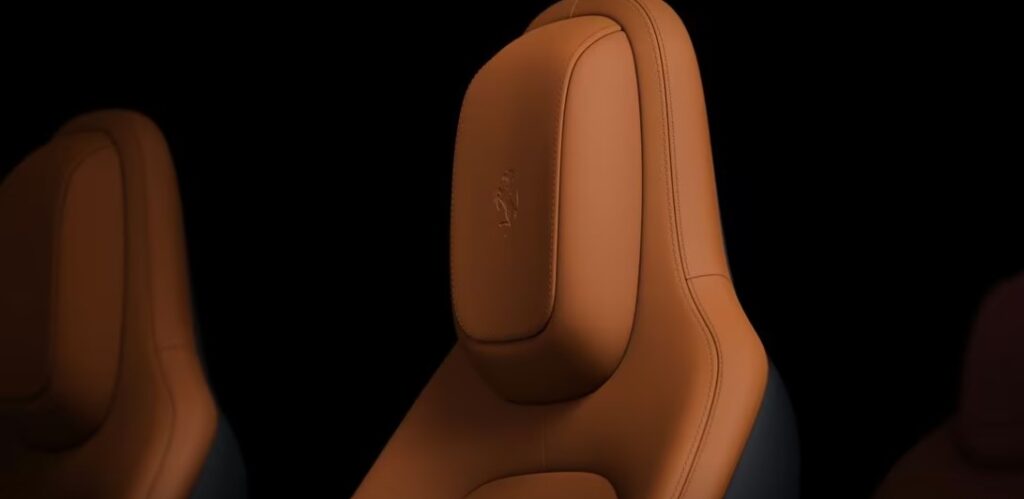
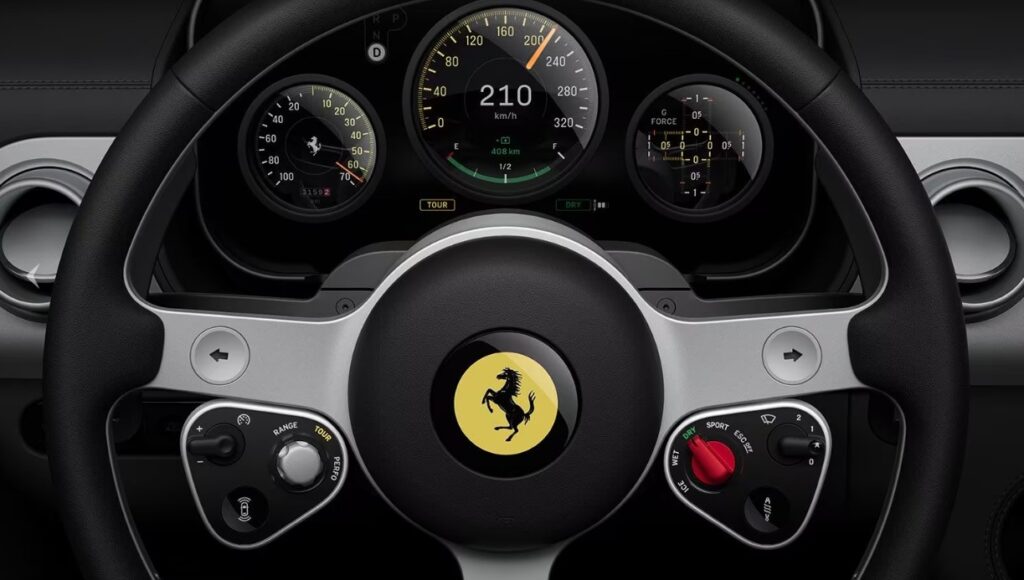
There is a screen, but it’s hiding. The driver gets a 12.5-inch instrument cluster, but it uses layered OLED technology to create a “parallax” effect.
- It looks like three separate analogue gauges with physical depth.
- The central speedometer features a “physical” needle rendered in high-def 3D.
- There is a smaller 10-inch central screen for maps, but it’s mounted on a ball-joint and can be pushed away when you just want to drive.
🏁 AutoCritic Verdict: The Soul Returns
The Ferrari Luce (Italian for “Light”) proves that the future of luxury isn’t about adding more features; it’s about curating them. By bringing back physical dials, toggle switches, and tactile materials, Ferrari has fixed the biggest complaint enthusiasts have about EVs: the lack of soul.
The full car reveals in May 2026, but if the outside is half as good as this interior, the game is over.
Do you agree with Jony Ive? Are physical buttons better than touchscreens? Let me know in the comments!