In a world rapidly filling with gigantic touchscreens, the humble steering wheel remains the most vital connection between driver and machine. But as this incredible visual timeline reveals, the Mercedes E-Class steering wheel has become a battlefield for the future of automotive control.
Look at modern car news globally, and one debate dominates: Are physical buttons dying? From Volkswagen admitting they went too far with touch controls to Mercedes-Benz doubling down with their massive “Superscreen” dashboards in the newest E-Class (W214), the way we interact with our cars is changing fast.
We often focus on the screens in the center console, but the real revolution happened right under our thumbs.
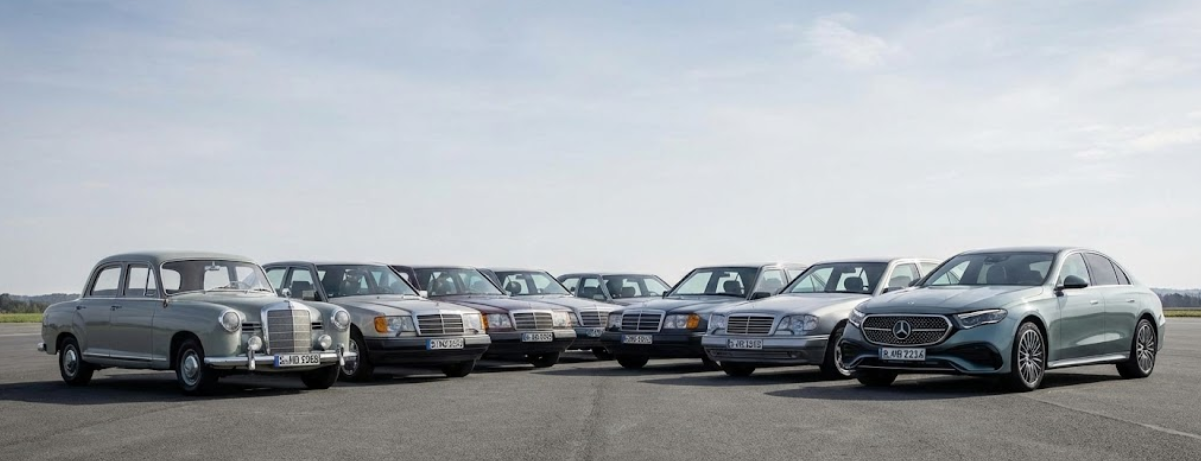
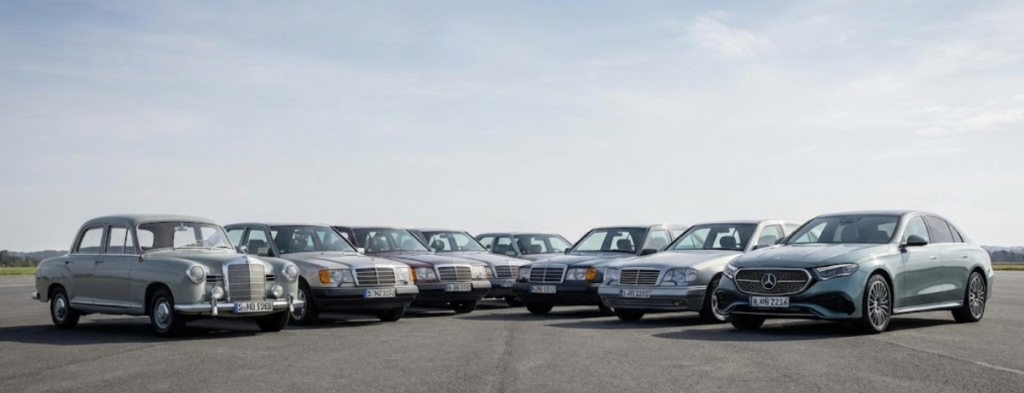
Thanks to this stunning image charting the lineage of Mercedes-Benz steering wheels (tracking the spirit of the E-Class from its ancestors to today), we can witness the shift from the analog age to the digital era.
This isn’t just a change in fashion; it’s a technological roadmap of the last 50 years of motoring.
Phase 1: The Analog Purity
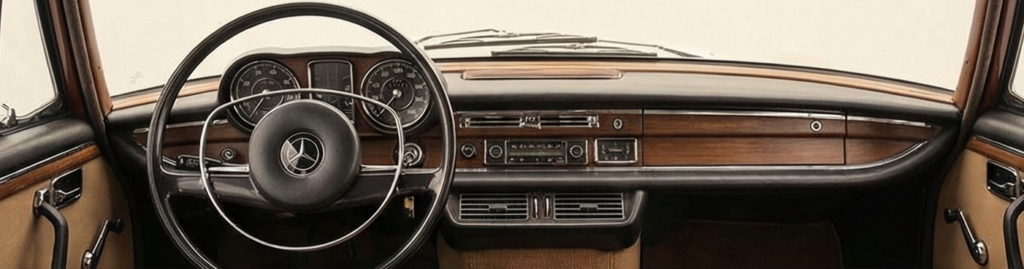
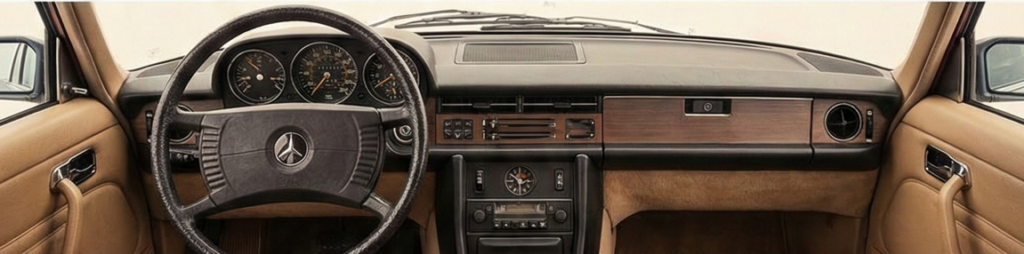
Transport yourself back to the 1970s and early 80s (think W123). The first wheel on the left is pure, unadulterated functionality. The rim is thin and hard, large in diameter to act as a tiller in an era when power steering wasn’t as overly boosted as today. The center hub had one job: the horn. There are no distractions here—just you and the road.
Phase 2: The Dawn of Safety and Bulk (Second and Third Wheels)
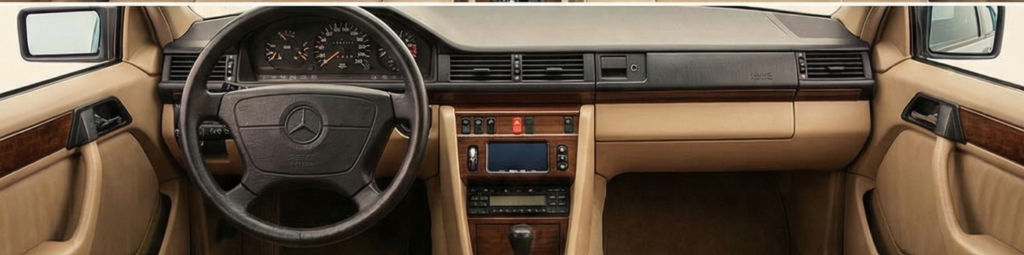
Moving right, we hit the era of the legendary “bank vault” Mercedes (W124 and W140 era). Why did steering wheels suddenly get so bulky in the 90s?
The answer is safety. The introduction of the SRS airbag required significant packaging space right in the center boss. These wheels define an era of robust, uncompromising German engineering, prioritizing occupant safety above sleekness.
Phase 3: The Multi-Function Revolution (Fourth Wheel)
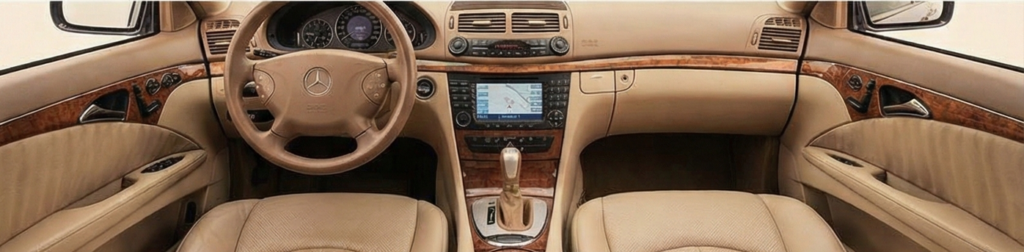
This is the pivotal moment. The fourth wheel marks the birth of the modern “cockpit.” Notice those slivers of silver on the spokes housing physical buttons.
Suddenly, drivers didn’t need to take their hands off the wheel to adjust the radio volume or check trip data. It was the first step toward centralizing control, a trend that would eventually dominate interior design.
Phase 4: The Digital Command Center (Fifth and Far Right Wheels)
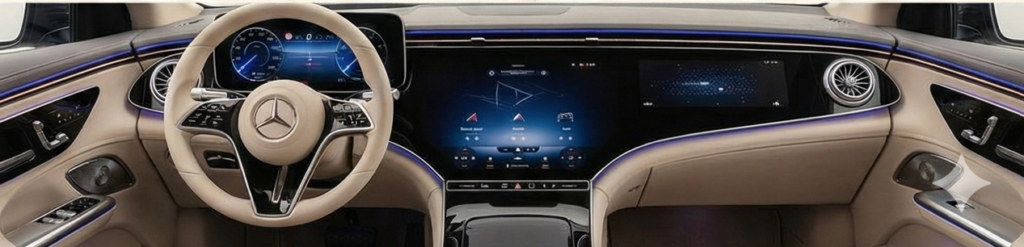
The final two wheels represent the current state-of-the-art, leading up to the modern E-Class experience.
The fifth wheel introduces a sportier, sculpted feel with a flattened bottom, proving that executive sedans could still feel athletic.
But the final wheel on the far right is the true game-changer. This is where the current global debate about car interiors lives. The physical “clicky” buttons are gone, replaced by capacitive touch surfaces with haptic feedback.
This isn’t just a wheel for turning corners anymore; it is a complex digital interface designed to navigate the sophisticated MBUX infotainment systems. It is elegant, futuristic, and requires a new kind of muscle memory from the driver.
The Future is Under Your Thumbs
As autonomous driving technology creeps closer, the role of the steering wheel is changing again. Some concepts even suggest it should fold away entirely.
Until then, this image serves as a powerful reminder that the most profound automotive innovations don’t always happen under the hood sometimes, they happen right in the palms of our hands.
What’s your take on the modern “digital” steering wheel? Do you miss the simplicity of the analog classics, or do you love having total control at your fingertips? Let us know in the comments below!