In this new series on AutoCritic, we aren’t chasing the latest EV launch or dissecting the newest ADAS software update. Instead, we are looking in the rearview mirror. We are hunting for the cars that were too good for their time, the misunderstood geniuses, and the “flops” that have aged like fine wine.
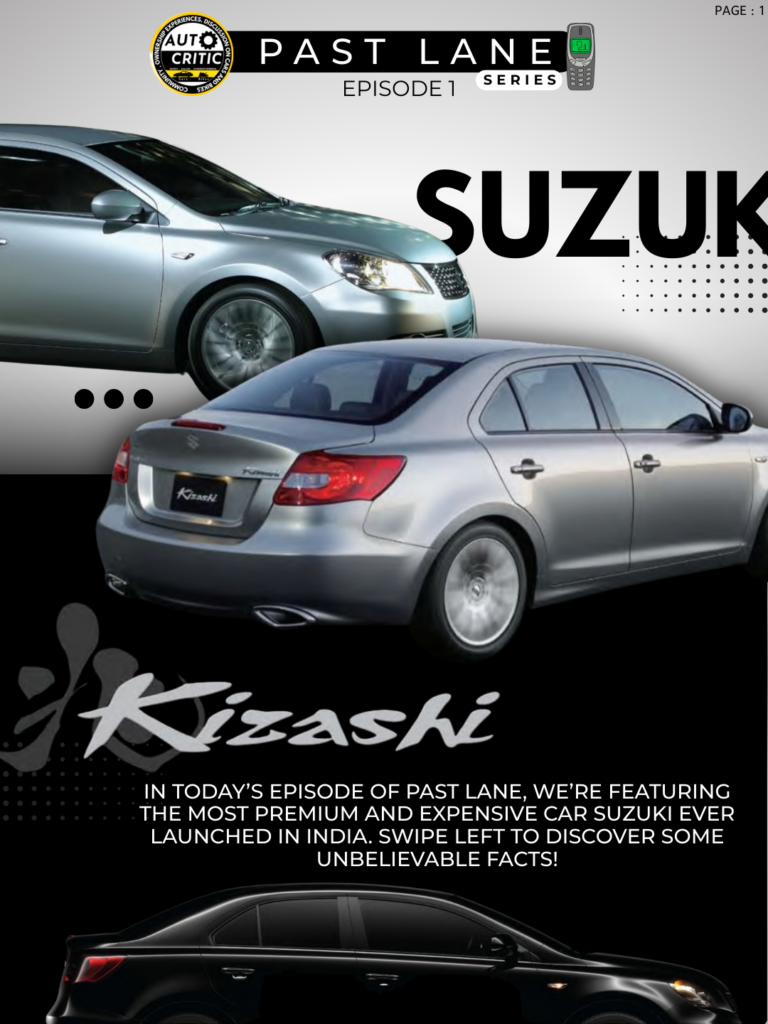
For Episode 1, there was only one choice. It is a car that promised to change the perception of an entire brand but ended up as a cautionary tale. It is the misunderstood samurai: The Suzuki Kizashi.
In 2026, where cars are increasingly becoming “software-defined” appliances, the Kizashi stands as a monument to a different era. An era where engineering budgets were spent on suspension geometry, not subscription-based heated seats.
The “Omen” That Came Too Soon
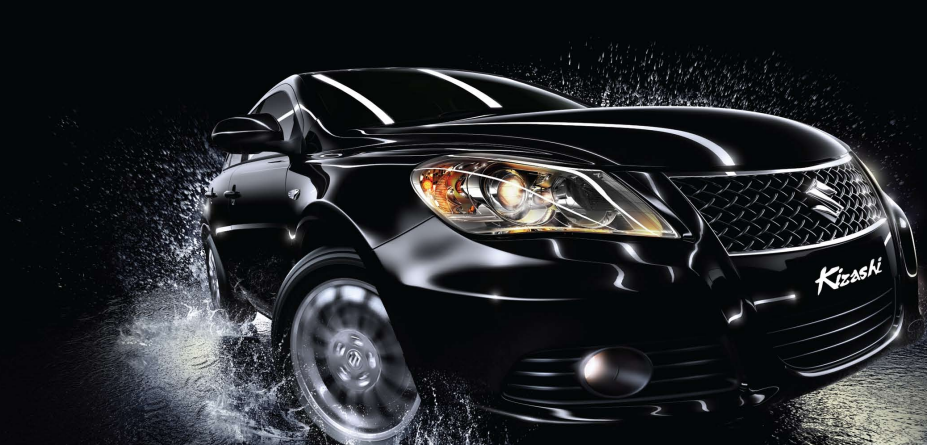
The word Kizashi (兆) is Japanese for “Omen” or “Sign of Good Things to Come.” It was Suzuki’s moonshot. Known globally for making cheerful small cars and rugged 4x4s, Suzuki wanted to sit at the grown-ups’ table. They wanted to fight the Honda Accord, the Volkswagen Jetta, and even the BMW 3-Series.
And they didn’t just want to compete; they wanted to win.
The tragedy of the Kizashi isn’t that it was a bad car. It’s that it was a phenomenal car launched by the wrong brand, at the wrong price, at the absolute worst time in economic history.

The Timeline: A Brief History of Ambition
To understand why this car is special, you have to look at its birth. This wasn’t a re-badged Maruti. This was a ground-up global project.
- 2007 (Frankfurt Motor Show): Suzuki shocks the world with the Concept Kizashi 1. It’s a low-slung, red aggressive wagon with a diesel engine. The world takes notice.
- 2007 (Tokyo Motor Show): The Concept Kizashi 2 debuts. It’s a crossover-wagon hybrid (way before that was cool).
- 2008 (New York Auto Show): The Concept Kizashi 3 appears. This is the sedan form. It looks muscular, silver, and ready for production. Suzuki confirms a 300+ HP V6 is in the works (which sadly never happened).
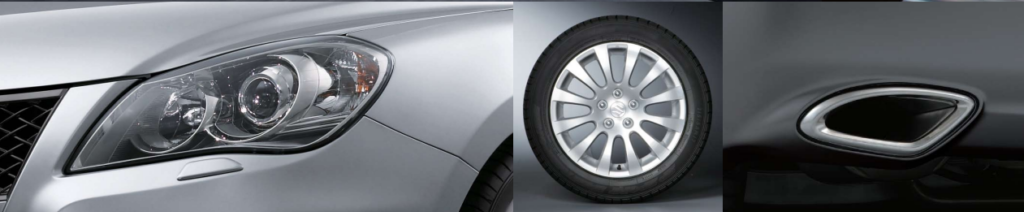
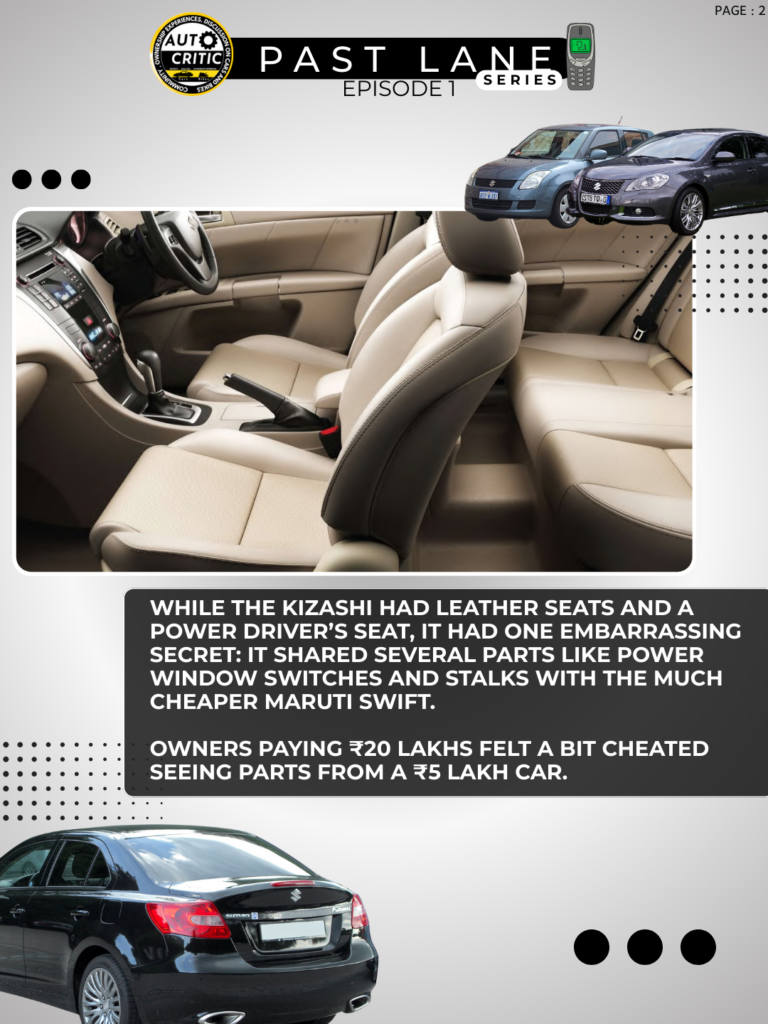
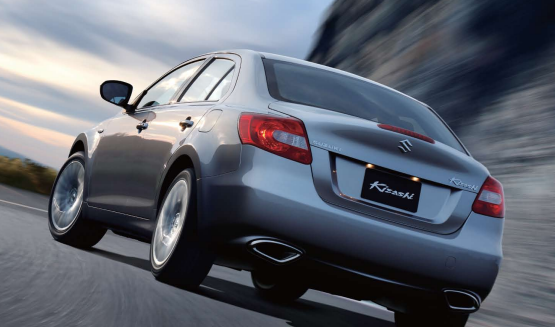
- 2009 (Global Launch): The production Kizashi launches in Japan and the USA. It retains the stunning exhaust tips and the aggressive stance of the concept.
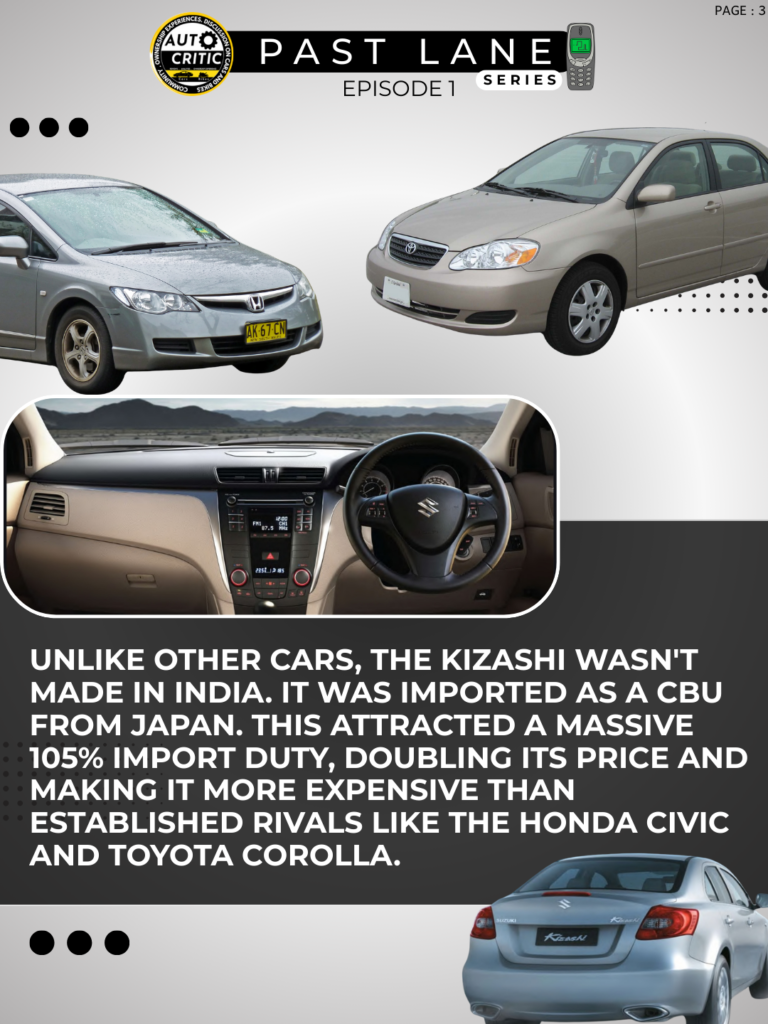
- February 2011 (India Launch): Maruti Suzuki launches the Kizashi in India. Crucially, it is a CBU (Completely Built Unit) import from Japan.
- Launch Price: ₹16.5 Lakhs (Manual) to ₹17.5 Lakhs (CVT). In 2011 money, this is astronomical for a “Maruti.”
- 2012 (The beginning of the end): Suzuki announces it is pulling out of the United States car market entirely. The Kizashi loses its primary target market.
- 2014: Production ends globally. The “Omen” becomes a memory.
Engineering: Why It Feels So Good in 2026
Fast forward to today, January 2026. Why are we talking about a failed sedan from 15 years ago?
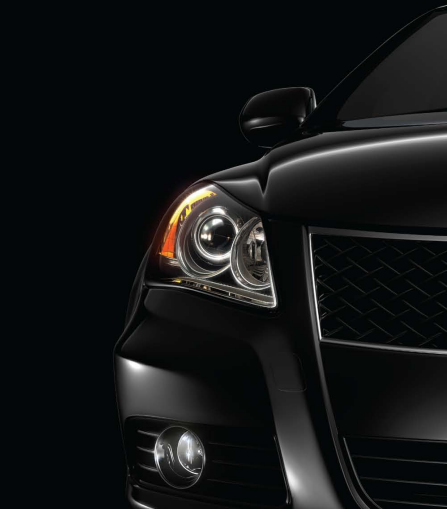
Because of how it drives.
In 2026, even “sporty” cars feel synthetic. Steering wheels are disconnected from the road, and engines are choked by emissions filters. The Kizashi was different. Suzuki engineers spent months testing this chassis on the Nürburgring in Germany and on the broken cobblestone roads of the UK.
The Heart: The J24B
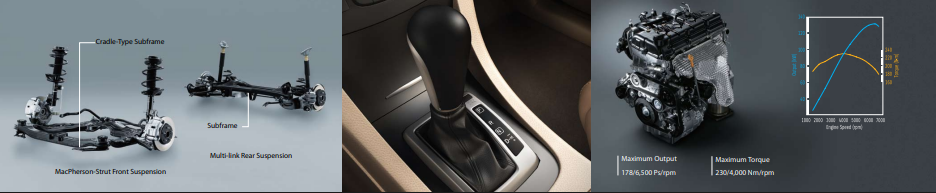
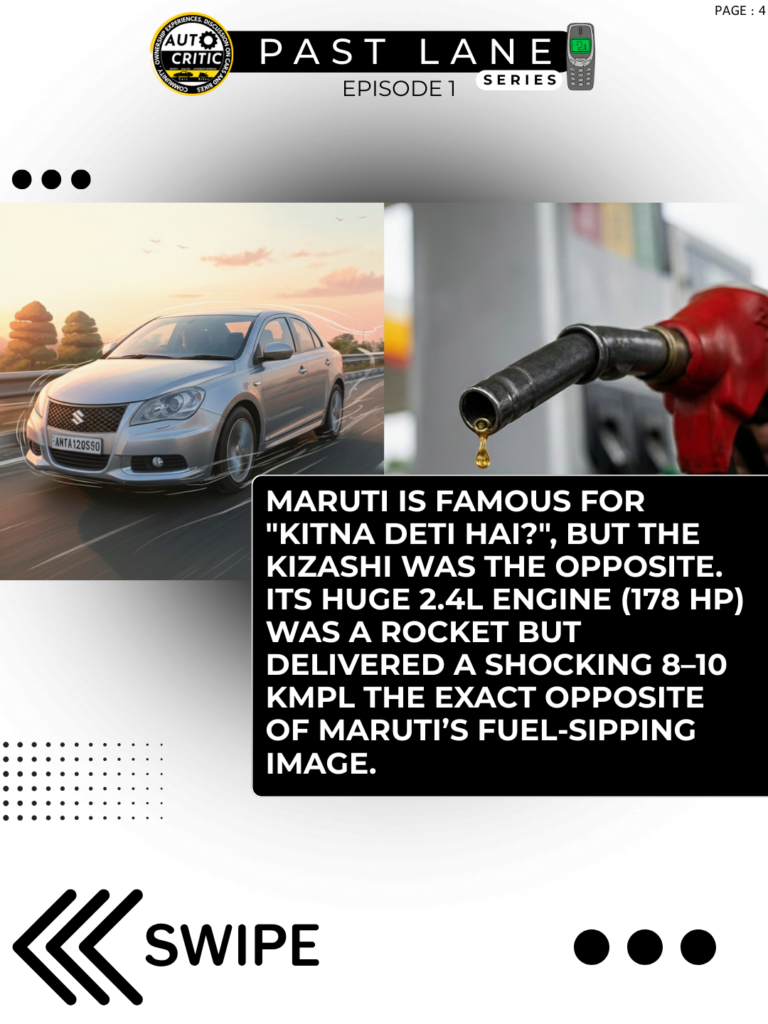
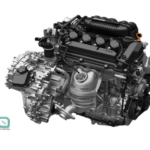
Under the hood sits the 2.4L naturally aspirated 4-cylinder engine (J24B).
- Power: 178 BHP
- Torque: 230 Nm
- 0-100 km/h: ~7.8 Seconds (Manual)
There is no turbo lag here. You put your foot down, and the car surges forward with a linear, mechanical growl. It’s a sensation that is disappearing from the modern world.
The Handling
Most cars in this segment (like the Camry or Accord) were boats. They floated. The Kizashi was tight. It featured a sophisticated multi-link rear suspension and Akebono brakes (a brand usually found on high-end sports cars).
The steering was electric, yes, but it was weighted heavily. It resisted you in corners. It communicated what the front tires were doing. If you drive a modern 2026 sedan and then jump into a Kizashi, the Suzuki feels like a go-kart.
Why Did It Fail? (The Perfect Storm)
If it was so good, why did it flop?
- The Badge Snobbery: In India, paying ₹17 Lakhs for a “Maruti” was unheard of. Your neighbors would ask why you didn’t buy a used BMW or a new Skoda Laura. The badge on the grill couldn’t justify the price on the sticker.
- The CBU Tax: Because it was imported from Japan, it attracted over 100% tax duties. Had Maruti manufactured it in Manesar, it could have cost ₹11-12 Lakhs, and it would have been a bestseller.
- The Fuel Economy: The 2.4L engine was thirsty. In a mileage-obsessed country (“Kitna deti hai?”), a petrol sedan delivering 8-9 km/l in the city was a hard sell.
- No Diesel: In 2011, India was obsessed with diesel engines. The Kizashi was petrol-only. That was the final nail in the coffin.
The AutoCritic Verdict: Buy It Now
Here is the reality of the market in 2026. New cars are expensive. A basic compact SUV now costs what the Kizashi did back then.
The Kizashi is currently in the “sweet spot” of the used car market. It is cheap enough to be a project car, but reliable enough (it is a Suzuki, after all) to be a daily driver. Parts can be tricky to source, but thanks to global internet commerce, you can get J24B parts from the US or Japan relatively easily.
What to look for if you are buying:
- The CVT Whine: The automatic transmission (CVT) is the weak link. If it whines, walk away. Ideally, find the 6-speed Manual. It is rare, but it transforms the car.
- Suspension Bushes: Given the age, the rubber bits will likely need replacing.
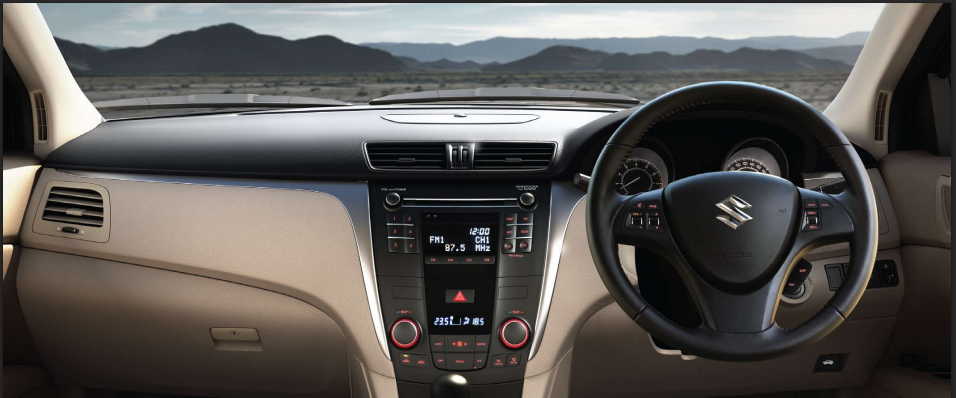
- Electronics: Check the steering controls and the stereo.
If you can find a clean specimen, buy it. You aren’t just buying a used car; you are buying a piece of history. You are buying the moment Suzuki dared to dream big.
The Kizashi was an omen, alright. It was an omen that the golden age of mechanical, driver-focused sedans was coming to an end. Driving one today is the best way to honor that legacy.
Did you ever own or drive a Kizashi? Do you agree that it’s a future classic? Drop a comment below and let’s discuss!
Stay tuned for PastLane Episode 2, where we revisit the Japanese legend that was once the undisputed King of the D-Segment. Hint: It rhymes with ‘Sword’, and gives you a kick when the revs drop.
Past Lane Ep – 1 Post