Welcome back to AutoCritic.in, where we slash through marketing fluff to save your paint and your wallet.
You just drove your brand-new, metallic-finish beauty out of the showroom. It’s pristine. You want to freeze this moment forever. Within 15 minutes of entering Indian traffic, reality hits: dust, acidic swirl marks from the first eager cleaning cloth, hard water spots, and the dreaded stones launched by the truck in front.
It’s a war zone out there for your car’s clear coat.
Naturally, you are already searching for “how to protect new car paint.” Instantly, you are overwhelmed. Detailing studios are bombarding you with three high-tech acronyms and materials: Ceramic Coating, Graphene, and PPF (Paint Protection Film). Each claims to be the single magic bullet that guarantees a “showroom shine” for the next five years.
But this is India. What works in a detailing video filmed in a dust-free Californian garage often fails miserably under the NCR sun or Bengaluru rain.
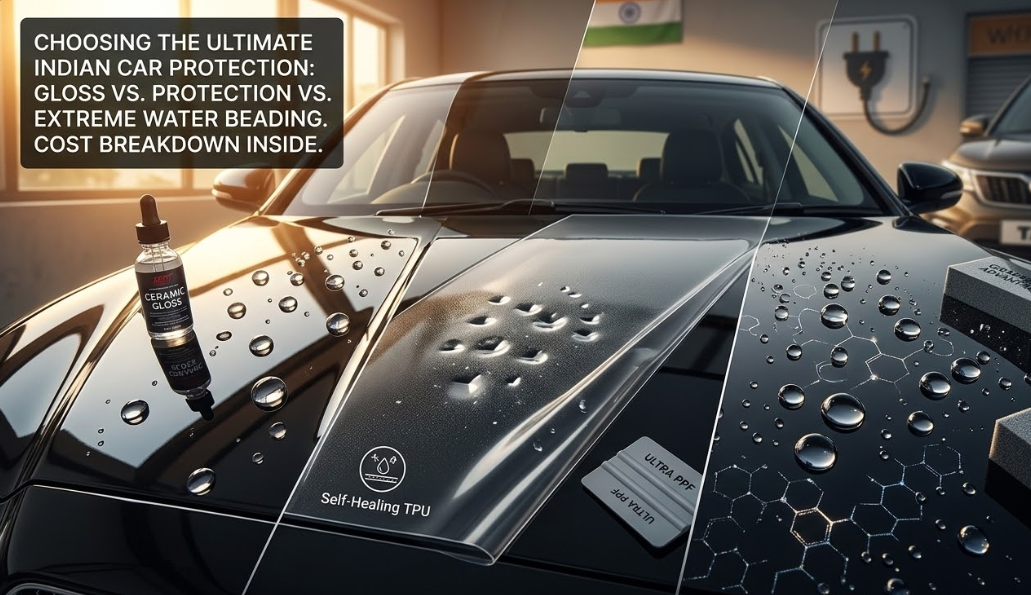
So, how do you make a truly decisive choice? You need a definition that clears up the confusion and gives you a definitive result. To help you settle this issue once and for all, we’ve broken down the advantages and disadvantages of each, specifically for the Indian environment.
Part 1: Ceramic Coating The Gloss Boss
Defining the Tech: What is Ceramic Coating?
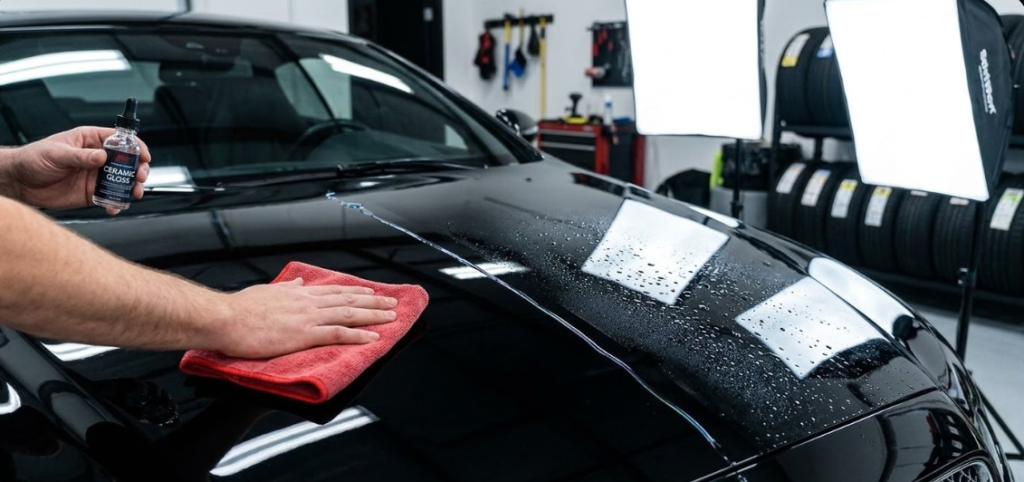
A Ceramic Coating (often sold as “Nano Ceramic”) is a liquid polymer that, when applied to a surgically clean car surface, chemically bonds with the clear coat. Think of it as a premium, super-hard, and semi-permanent replacement for wax. It creates an hydrophobic layer that transforms how liquids and dust interact with the surface.
Advantages for Indian Drivers:
- That Showroom Shine: Let’s not mince words. It provides an unmatched, mirror-like depth of reflection. The slickness of the surface makes colors pop and black cars look like oil spills.
- Unbeatable Hydrophobicity: This is key for India. Water, mud, and hard water spots don’t have an easy surface to grab onto. Rainwater will bead up into perfect spheres and sheet off.
- Self-Cleaning (to an extent): Since mud and dust find it hard to stick, a coated car is vastly easier to clean with a single pressure wash or a quick two-bucket method. It doesn’t attract dust like a freshly waxed car.
- UV Protection: A ceramic coating protects your car’s clear coat from harsh UV rays, preventing fading or yellowing over time. This is critical for cars parked outdoors in the Indian summer.
Disadvantages for Indian Drivers:
- NO Scratch Protection: This is the biggest misconception. Your car will still get swirl marks from incorrect washing (microfiber is mandatory). A stray stone will chip it. A fingernail will scratch it. It is hard, not impervious.
- The “Limp Mode” Maintenance Trap: You cannot just coat your car and ignore it for two years. To keep the hydrophobic effect alive, you must use a “ceramic-safe” shampoo and apply a “topper” or “boost” liquid every few months. If the hydrophobic layer fails, the car still looks decent, but the water beads disappear.
- Vulnerability to Heavy Water: If hard water beads sit on the coating and dry, the minerals can get baked into the nano-structure. This creates persistent water spots that are incredibly difficult to remove without polishing off the coating.
- Costly Mistakes: Incorrect application or curing results in high spots (dark streaks), clouding, or bubbles that are locked into the paint. Remedial polishing often means removing the entire layer and starting again, a costly mistake that can be avoided by hiring a qualified professional.
Part 2: PPF The Iron Dome of Paint Protection
Defining the Tech: What is PPF?
PPF (Paint Protection Film), or “Clear Bra,” is not a liquid coating at all. It is a high-grade, multi-layer polyurethane (TPU) film that is precision-cut and wrapped around the car’s body panels. Think of it as an ultra-thick, resilient screen protector for your entire car, acting as the ultimate shield.
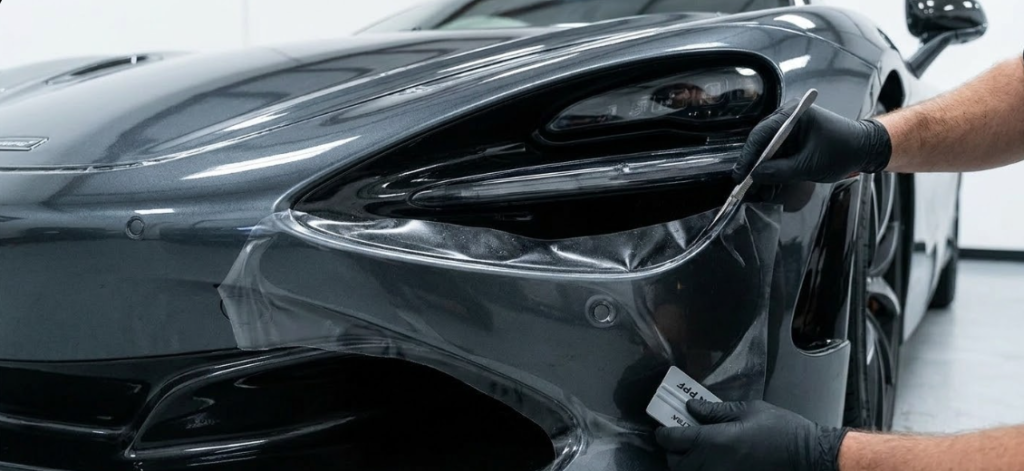
Advantages for Indian Drivers:
- TRUE Stone Chip & Heavy Scratch Protection: This is the only definitive method of paint protection that can absorb rock hits at 100+ km/h and resist serious parking-lot gouges from other people’s car doors. A stray fingernail cannot get through this.
- Definitive High-Speed Result: For mixed city and highway drivers, the result is peace of mind that a minor mishap or a high-speed debris hit will not lead to a costly trip to the denting-painting shop. It simply offers total protection for your investment.
- Hydrophobic (the high-end stuff): The top-tier PPF films (TPU) have an integrated hydrophobic layer that beads water similarly to ceramic coating, giving your car the best of both worlds.
- Self-Healing (some high-end stuff): Yes, this is real. Premium PPF films have a top coat that will “flow” and self-heal swirl marks and light scratches when exposed to heat (like sunlight or hot water). A decisive choice for those who park in the sun.
Disadvantages for Indian Drivers:
- NO Gloss: This is a major trade-off. While TPU is clear, it does not enhance gloss, and it often has an orange-peel texture (a microscopic waviness) that slightly blunts the paint’s reflectivity and sharpness.
- The “Yellowing” Fear: While TPU is clear, it can slowly yellow over 3–5 years from constant UV exposure. Poor quality PPF yellows rapidly and becomes brittle.
- Adhesive Failure: If applied incorrectly, bubbles or lifting edges can trap water and dirt, making the film look horrific and potentially damaging the paint underneath.
- Cost: It is, without a doubt, the most expensive paint protection option. Protecting the critical areas—hood, bumper, fenders—can easily cost ₹60,000–₹1.5 Lakh. A full wrap can cross ₹2 Lakh.
- Requires Maintenance: Like ceramic coating, PPF needs specialized care to keep the hydrophobic top coat functioning.
Part 3: Graphene Coating The Hydrophobic Champ
Defining the Tech: What is Graphene?
Graphene is the single strongest and thinnest material known to man. In car detailing, it is usually a reduced form of Graphene Oxide (rGO) dissolved in a liquid ceramic base. Think of it as Ceramic Coating 2.0. It leverages the unique molecular structure of graphene to create a harder, more flexible, and even more slick surface, resulting in an unbeatable water beading performance.
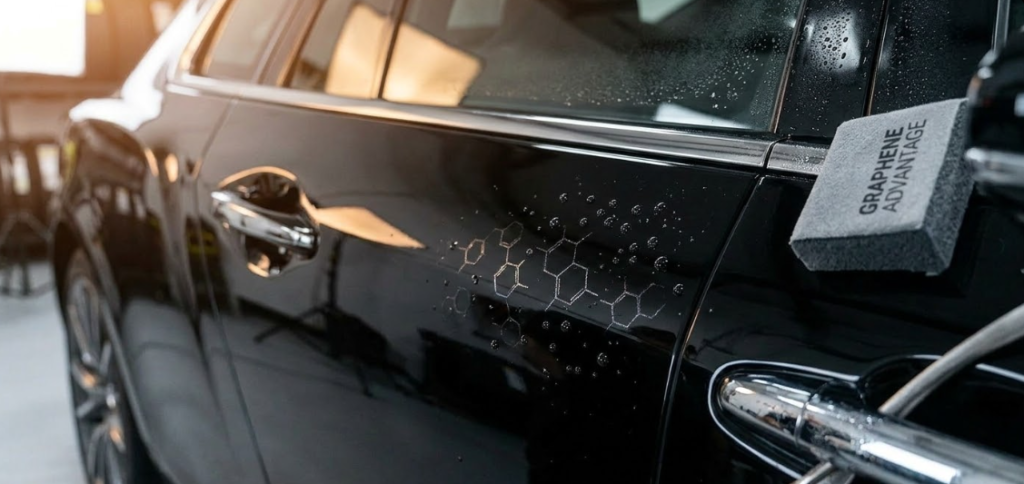
Advantages for Indian Drivers:
- UNBEATABLE Hydrophobicity: This is the Graphene Champ. Water beading is tighter, faster, and more dramatic than anything else.
- Harder Clear Coat Protection: A Graphene layer is harder than ceramic, providing slightly better resistance to swirl marks and light micro-marring.
- Self-Cleaning (to an even greater extent): Due to the incredible slickness, dust, mud, and water stains will slide off with minimal effort, often during a simple rain shower.
- Flexible & Anti-Corrosion: Graphene is flexible, meaning it won’t crack or crack from clear coat expansion and contraction. It also offers slightly better corrosion resistance.
Disadvantages for Indian Drivers:
- NO Gloss: This is a key trade-off. While Graphene offers better gloss than PPF, it is typically duller than ceramic, making the colors pop less. A trade-off for durability.
- Vulnerability to Hard Water: While Graphene is hydrophobic, hard water spots can still etch themselves into the graphene layer, making removal an expensive process.
- The “Clouding” Trap: Poorly applied Graphene can cloud the clear coat, creating an ugly, hazy appearance that requires professional polishing to fix.
- Requires Maintenance: Like ceramic coating, Graphene needs specialized care to maintain its incredible hydrophobic and slick performance.
- Cost: It is, without a doubt, a premium paint protection option. Graphene coating can easily cost ₹50,000–₹1 Lakh.
Part 4: The Final Verdict: How to Choose in 2026 India
The Decisive Question: How to Settle the Gloss Boss vs. Iron Dome Conflict Quickly
Now, let’s make a truly decisive choice—one that produces a definite result for your specific needs. The core conflict in your decision-making boils down to this: Gloss vs. Protection.
Summary Comparison Table (Gloss vs. Protection vs. Water Beading)
| Feature | Ceramic Coating | PPF | Graphene Coating |
| Gloss | UNBEATABLE (Gloss Boss) | Good (but slightly duller) | UNBEATABLE (Hydrophobic Champ) |
| Scratch Protection | NO (Only Swirl Marks) | TRUE (Rock Chips & Gouges) | TRUE (Swirl Marks) |
| Water Beading | Good | Good (TPU) | UNBEATABLE |
| Duration | 2–5 Years ( semi-permanent) | 3–10 Years ( permanent) | 3–5 Years ( permanent) |
| Cost | Low (₹20,000–₹60,000) | High (₹60,000–₹2 Lakh) | Medium (₹50,000–₹1 Lakh) |
Scenario 1: The Do-It-All Daily Commuter in Indian Traffic
If 80%+ of your driving is in heavy Indian city traffic, where 20 km/h crawls, stop-and-go jams, and unpredictable hazards like stray two-wheelers are a daily occurrence, go with Ceramic Coating. This choice offers total flexibility and peace of mind. It won’t break the bank and will keep your car looking great for your next office run or airport trip.
Scenario 2: The Do-It-All Family Car for Long Indian Road Trips
If you own the one car in your garage that needs to handle both the chaotic city commute and sudden, unpredictable 600+ km inter-state drives without route-planning anxiety, stick to PPF. A strong TPU film offers peace of mind and total protection for your investment, shielding it from rock hits at 100+ km/h and serious parking-lot gouges.
Scenario 3: The Indian Highway King Carrying Heavy Loads
If your daily commute involves long stretches of open highway, or if you regularly tour across states carrying heavy loads like agricultural produce or luggage, Diesel is still your king. Just make sure you drive it hard enough to keep that DPF clean. A Graphene coating is a smart choice for this scenario, providing a durable, hard-wearing layer that resists high-speed debris and heavy loads.
Conclusion: The Verdict on Indian Car Paint Protection
Navigating the complex 2026 car market is a minefield of advanced paint protection technology. If you want to make absolutely sure you are picking the right machine that fits your budget and driving style, a personalized strategy is key.