Welcome back to AutoCritic.in, where we cut through the brochure jargon and talk about how cars actually perform on our chaotic Indian roads. EV vs Petrol Cars have always been confusing.
If you are planning to buy a new car in 2026, you are stepping into one of the most confusing automotive markets in history. The days of simply choosing between “petrol for city, diesel for highway” are officially dead. Thanks to strictly enforced BS6 Phase 2 and Real Driving Emission (RDE) norms, the engines under our hoods have radically transformed.
Today, buyers are terrified of the dreaded “Diesel Particulate Filter (DPF) clogged” warning light. Meanwhile, petrol cars are quietly being fitted with a new piece of tech called the Gasoline Particulate Filter (GPF). And sitting right in the middle of this internal combustion chaos are Electric Vehicles (EVs), offering massive long-term savings but carrying hefty upfront price tags.
So, how do you make a truly decisive choice—one that produces a definite result and settles the issue quickly and effectively for your garage?
Let’s break down exactly what is happening with modern exhausts, why your BS6 car might be choking in city traffic, and whether 2026 is the year you finally pull the plug on fossil fuels and go EV.
The Diesel Dilemma: Why DPF Issues Are Haunting Indian Owners
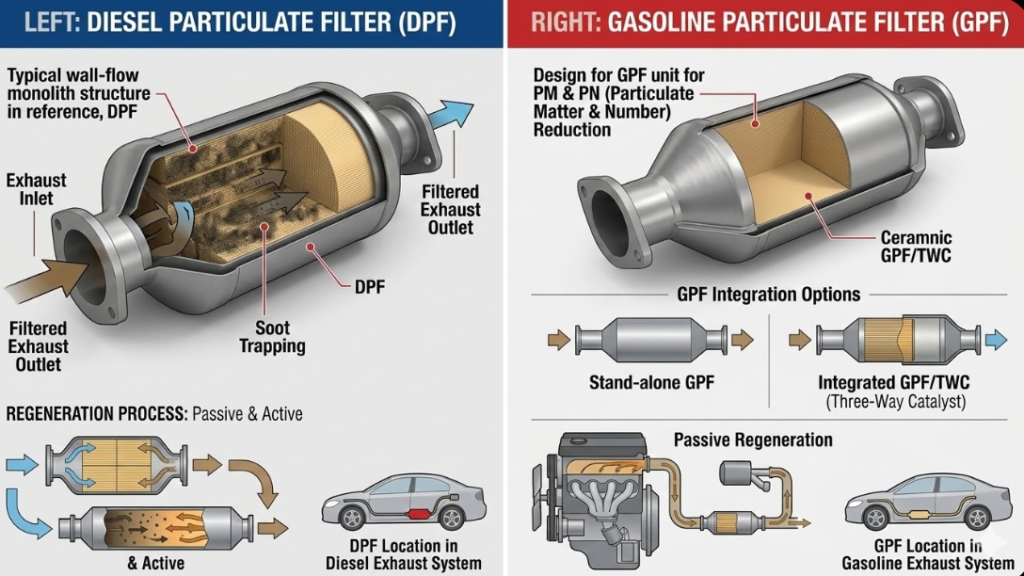
Let’s get straight to the biggest headache in the Indian car scene right now: modern diesel engines. To meet strict BS6 emission norms, manufacturers had to bolt a Diesel Particulate Filter (DPF) onto the exhaust system.
Its job is simple: trap the toxic black soot that diesel engines naturally produce. But here is the catch—that soot doesn’t just disappear. The filter has to burn it off in a process called “regeneration.”
Why City Driving is Killing Your Diesel Car
To successfully regenerate and burn off the soot, the exhaust needs to reach extremely high temperatures. This requires the car to be driven at a steady speed (usually above 60 km/h) at over 2000 RPM for about 20 to 30 minutes.
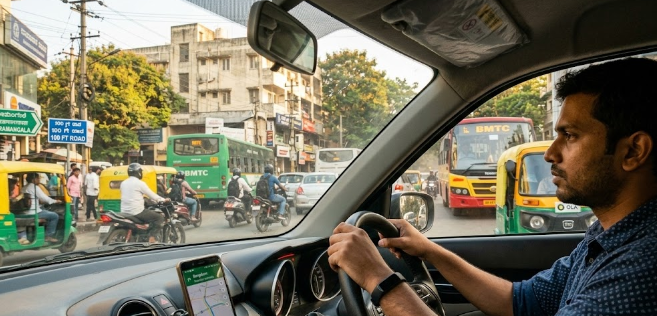
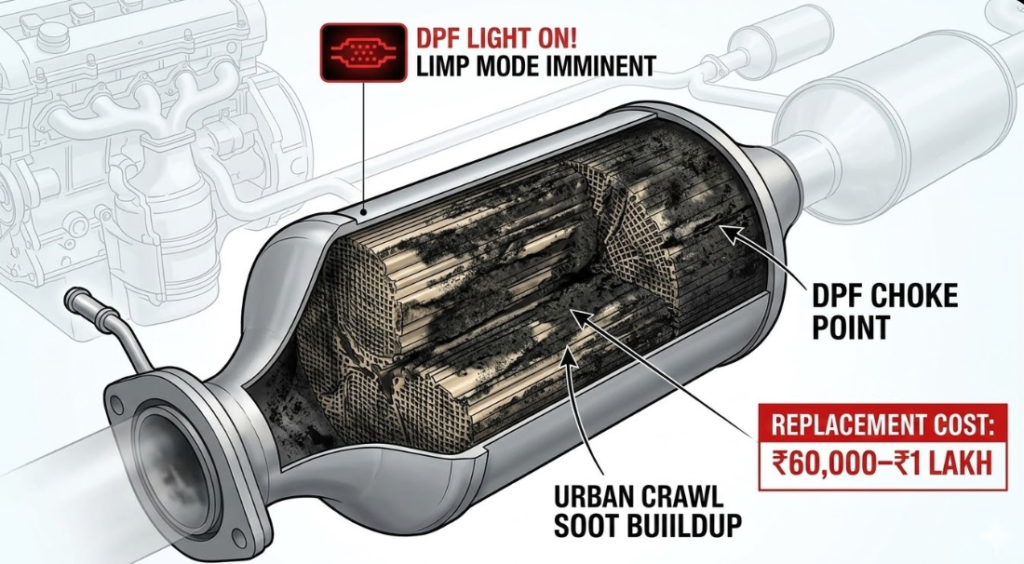
Now, picture your daily commute in Bangalore, Mumbai, or Delhi. You are crawling at 15 km/h, stopping every ten seconds, and barely touching third gear. The exhaust never gets hot enough. The soot builds up, the filter chokes, and the dashboard lights up like a Christmas tree.
If ignored, the car drops into “limp mode,” drastically cutting power to save the engine. A forced regeneration at the service center takes hours, and if the DPF is permanently damaged, you are looking at a replacement bill north of ₹60,000 to ₹1 Lakh.
The Secret Culprit: Wrong Engine Oil
Another massive factor in 2026 is engine oil. Modern BS6 diesels must use “Low SAPS” (Low Sulphated Ash, Phosphorus, and Sulphur) engine oil. If your local mechanic uses older, cheaper High SAPS oil, the ash from the burnt oil permanently blocks the DPF, ruining the filter in record time.
The AutoCritic Verdict on Diesel: Buy a diesel in 2026 only if you drive heavily on the highways. If your monthly running includes weekend road trips of 500+ km, a diesel still makes sense. If you just drive to the office and back, stay away.
Enter the GPF: Are Petrol Cars Next in Line for Trouble?
With the tightening of particulate number (PN) limits under BS6 Phase 2, Direct Injection (GDI) turbo-petrol engines are now being fitted with a Gasoline Particulate Filter (GPF).
Naturally, buyers who abandoned diesel to avoid DPF issues are now asking: Is the GPF going to ruin my petrol car too?
The short answer is: No, but there are trade-offs.
Why GPF is Not the Next DPF
Petrol engines naturally run significantly hotter than diesel engines. Because the baseline exhaust temperature is already so high, a GPF can passively regenerate much faster and far more frequently. Even during standard city driving, a petrol exhaust usually generates enough heat to burn off trapped particles. You won’t face the mass epidemic of clogged filters and limp-mode nightmares that plague modern diesel owners.
The Real Trade-off: Performance and Cost
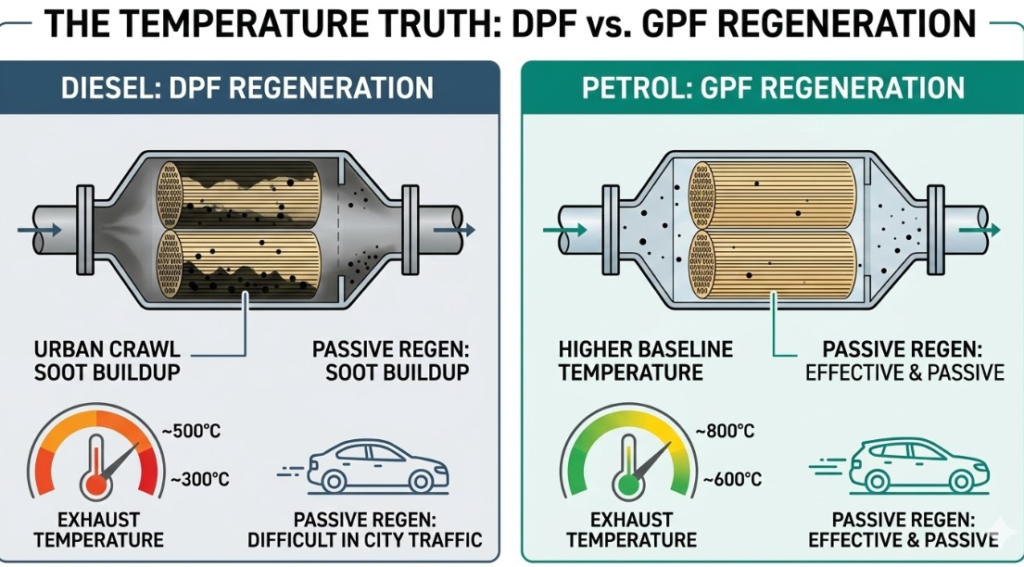
While reliability isn’t a massive concern, the GPF introduces a different set of challenges:
- Exhaust Backpressure: Pushing exhaust gas through a dense filter creates resistance. This backpressure can slightly blunt the sharp throttle response we love in turbo-petrol engines.
- Engineering Costs: To maintain performance and fuel efficiency, automakers have to re-tune ECUs and upgrade components, which slowly drives up the cost of turbo-petrol cars.
- Fuel Sensitivity: GPF-equipped cars need high-quality, low-sulphur petrol. Consistently using adulterated fuel from sketchy pumps will shorten the filter’s lifespan.
EV vs Petrol: The Real 2026 Cost Breakdown
With combustion engines becoming more complex and expensive to maintain, Electric Vehicles (EVs) have never looked more tempting. The upfront cost of an EV is still higher than its petrol counterpart, but the gap is closing fast thanks to falling battery prices and government subsidies.
Let’s look at a quick 5-year running cost comparison based on a driver covering 1,000 km a month in city traffic.
The Petrol Reality
- Mileage: Let’s assume a realistic 13 km/l in city traffic.
- Fuel Cost: At roughly ₹100 per litre, you are spending about ₹7.6 per kilometer.
- Monthly Fuel Bill: ₹7,600.
- 5-Year Fuel Bill: ₹4,56,000.
- Maintenance: Regular oil changes (using expensive synthetic oils), spark plugs, GPF maintenance, and brake pads add up to roughly ₹60,000 over 5 years.
The EV Advantage
- Efficiency: Most mass-market EVs consume about 0.15 kWh per km.
- Charging Cost: Assuming you charge at home at an average domestic tariff of ₹8 per unit, your running cost is barely ₹1.2 per kilometer.
- Monthly Charging Bill: ₹1,200.
- 5-Year Charging Bill: ₹72,000.
- Maintenance: No engine oil, no spark plugs, and brake pads last incredibly long due to regenerative braking. 5-year maintenance rarely crosses ₹20,000.
Total Savings in 5 Years: You are looking at a massive saving of over ₹4 Lakh just in running and maintenance costs by switching to an EV. For heavy city users, the EV completely pays off its initial price premium within the first three to four years.
The Final Verdict: Which One Should You Buy?
As car enthusiasts, we love the roar of an engine, but as smart buyers, we have to look at the math. Here is the AutoCritic breakdown to help you make the right call:
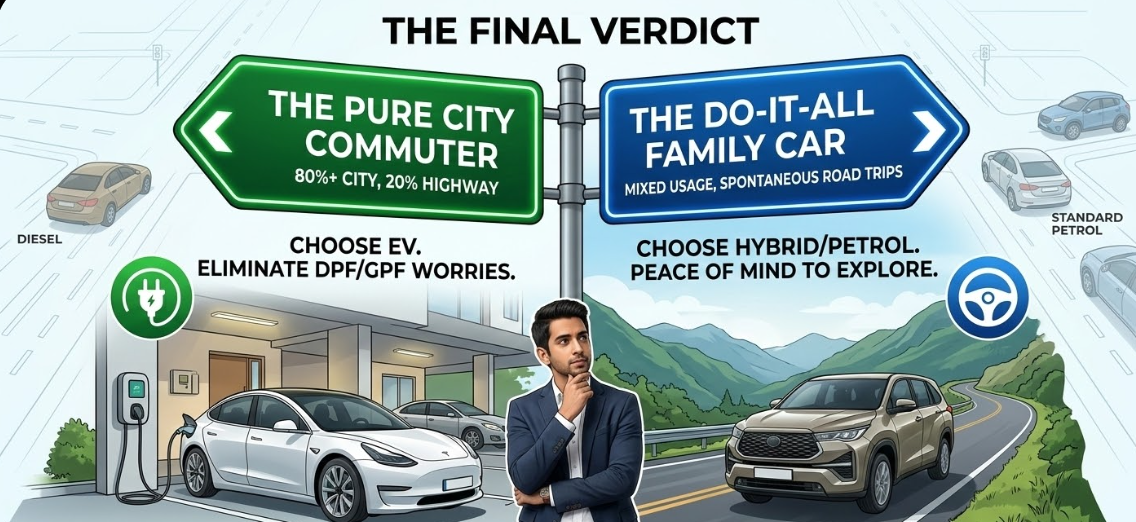
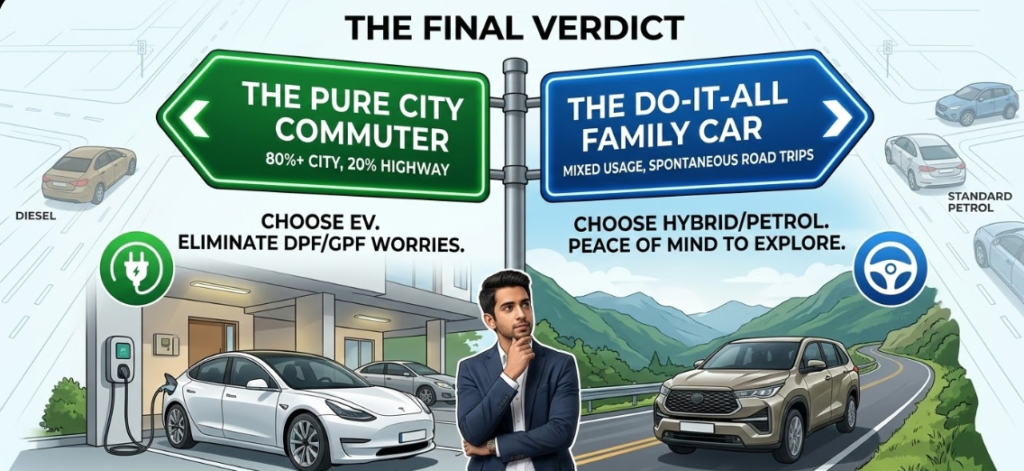
- The Pure City Commuter: If 80% to 90% of your driving is in heavy urban traffic and you have dedicated parking to install a home charger, go EV. It is a no-brainer. You escape the DPF/GPF headaches entirely, enjoy silent, punchy performance, and save lakhs of rupees.
- The Do-It-All Family Car: If you only have one car in the garage that needs to handle daily office runs, sudden airport trips, and unplanned 600 km inter-state drives without route-planning anxiety, stick to a naturally aspirated Petrol or a Strong Hybrid. It offers peace of mind and total flexibility.
- The Highway King: If your daily commute involves long stretches of open highway, or if you regularly tour across states carrying heavy loads, Diesel still rules. Just make sure you drive it hard enough to keep that DPF clean!
Navigating the 2026 car market is a minefield of complex engine tech and hidden long-term costs. If you want to make absolutely sure you are picking the right machine that fits your budget and driving style without throwing money away on the wrong fuel type, a personalized strategy is key.