
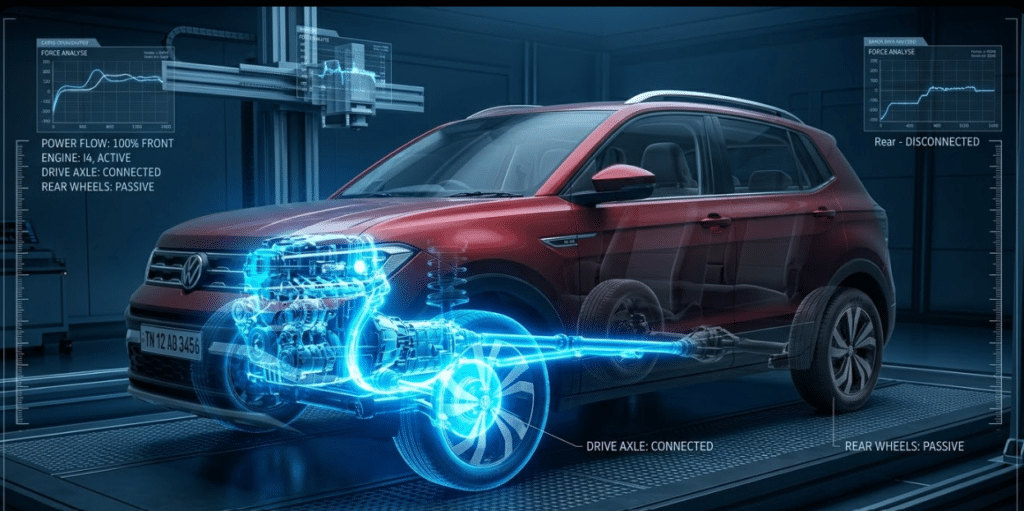
1. Front-Wheel Drive: The Practical Puller
In a Front-Wheel Drive system, the engine sends 100% of its power to the front two wheels. This is the “pulling” configuration. Because the engine and transmission sit directly over those wheels, the added weight creates excellent traction on slippery, rain-slicked Indian roads.
Technical Insight: Most Front-Wheel Drive cars use a “Transaxle” setup, combining the transmission and differential into one compact unit. As a malware analyst, I think of this as an “all-in-one” script—it’s efficient, uses fewer resources (parts), and is easier to maintain.
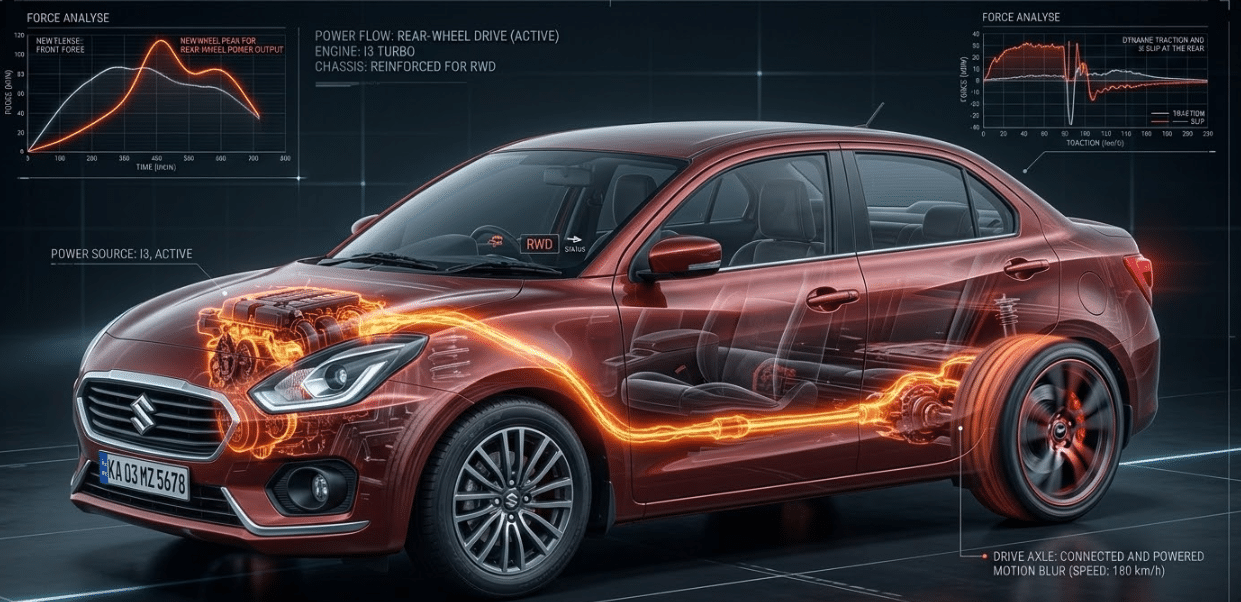
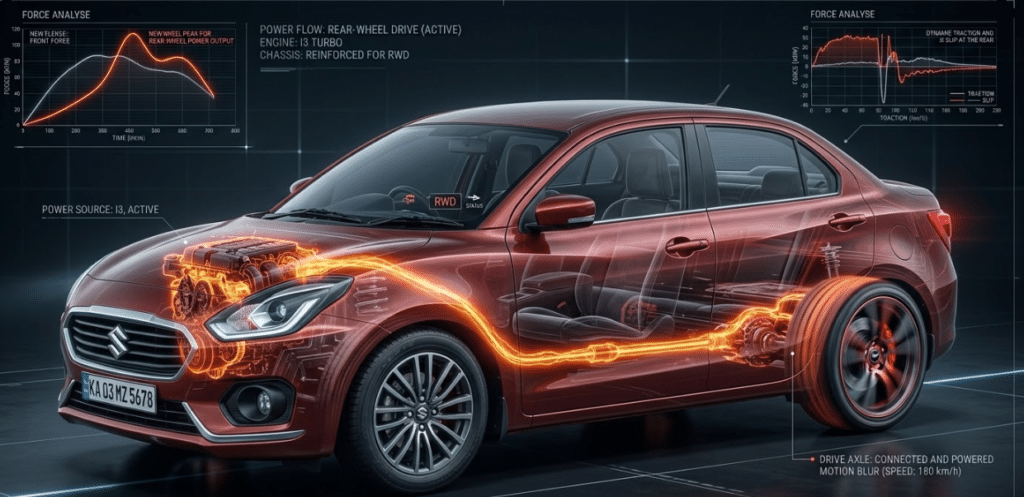
2. Rear-Wheel Drive: The Balanced Pusher
Rear-Wheel Drive is the purist’s choice. Here, the front wheels only handle the steering, while the rear wheels “push” the car. This separation of duties allows for incredible handling balance. It’s why luxury sedans like the BMW 3 Series or rugged workhorses like the Toyota Innova Crysta stick to this layout.
Technical Insight: The power travels from the front-mounted engine, through a long driveshaft, to a rear differential. This creates a 50/50 weight distribution. In the world of tech, this is like “distributed computing”—no single component is overloaded, resulting in a smoother, more balanced performance.
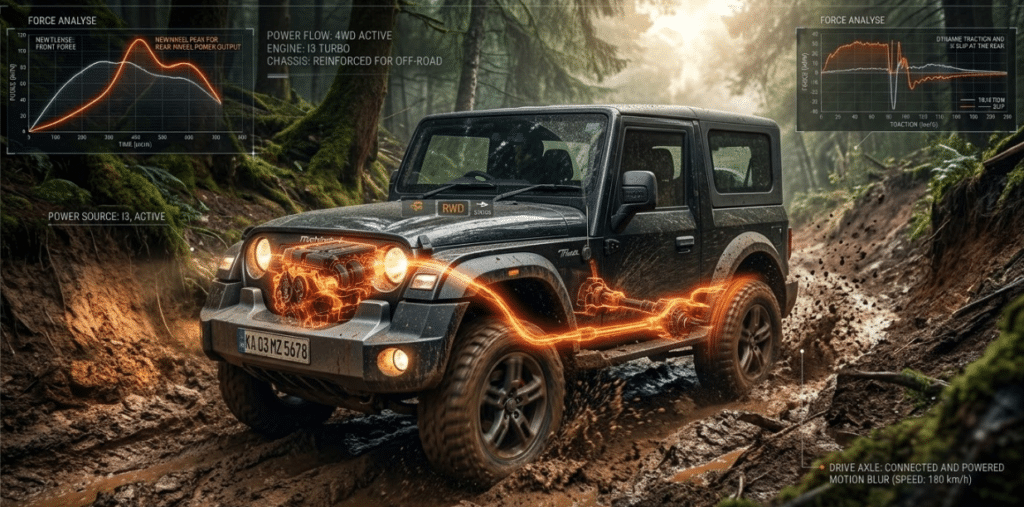
3. Four-Wheel Drive: The Rugged Conqueror
When the road ends, Four-Wheel Drive begins. Unlike the other two, this system can lock the front and rear axles together using a “Transfer Case.” This ensures that all four wheels spin at the exact same speed, providing maximum “grunt” for extreme situations.
Technical Insight: True Four-Wheel Drive is usually a “Part-Time” system. You engage it manually when you see mud, sand, or deep slush. On dry pavement, you must switch it off, or the drivetrain will “bind” and potentially break—similar to how running a heavy-duty debugger on a simple app can crash the system.
Pros and Cons in Indian Conditions
| Feature | Front-Wheel Drive | Rear-Wheel Drive | Four-Wheel Drive |
| Fuel Efficiency | Best (Lightweight) | Moderate | Lowest (Heavy) |
| Interior Space | Excellent (Flat Floor) | Cramped (Drive Tunnel) | Cramped |
| Wet Road Grip | Very Good | Poor (Prone to sliding) | Exceptional |
| Maintenance | Low & Simple | Moderate | High (More parts) |
| Best For… | Daily City Commute | Highway Cruising/Towing | Off-Road/Mountain Living |
The Autocritic Verdict: Which One Wins?
In 2026, the choice is clearer than ever:
- For the 90%: Front-Wheel Drive remains the king of India. It’s the reason why cars like the Tata Nexon and Hyundai Creta are bestsellers—they offer the best balance of mileage, space, and safety in the rain.
- For the Enthusiast: If you drive on open highways and value the “feel” of the steering, Rear-Wheel Drive is irreplaceable. It’s more durable for heavy loads and offers a “connected” driving experience.
- For the Adventurer: If your weekend involves exploring the Western Ghats or the Spiti Valley, don’t settle for less than Four-Wheel Drive. It’s not just a feature; it’s an insurance policy against getting stuck.
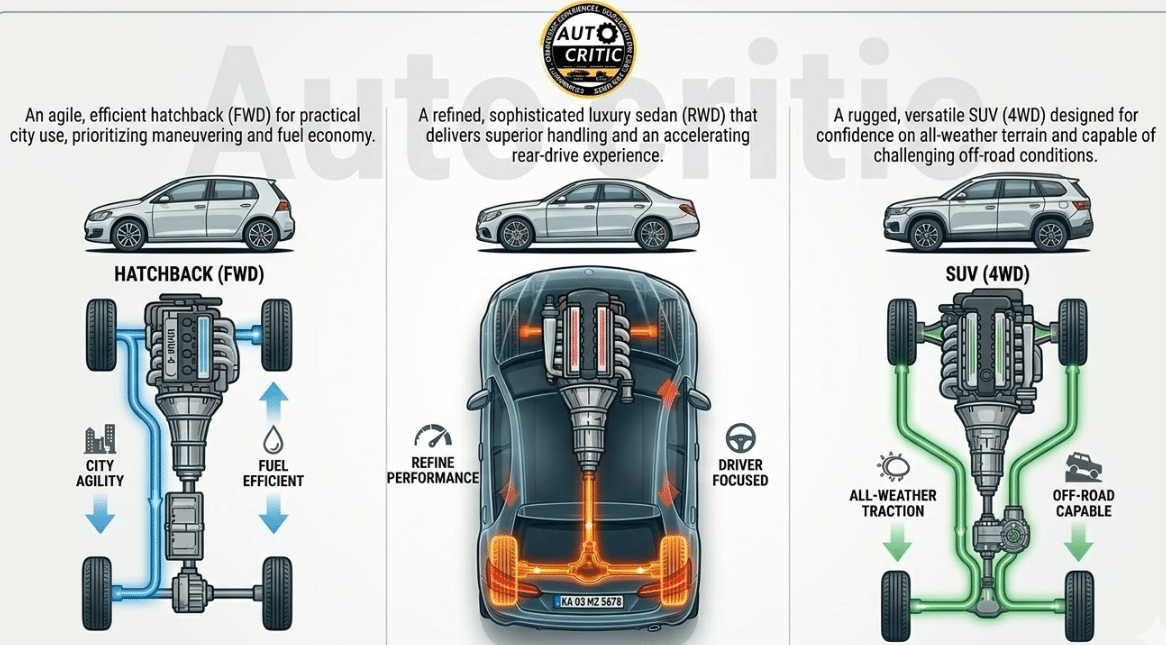
What’s your preferred way to move? Does the simplicity of Front-Wheel Drive win you over, or do you need the 4×4 badge for your peace of mind? Let us know in the comments!
Next Step: Would you like me to help you draft a high-converting Google Ads headline for this specific blog post to drive traffic to autocritic.in?