Let’s be honest: in India, the question “Kitna deti hai?” (How much does it give?) isn’t just a meme—it’s a financial survival strategy. As we navigate 2026, the Indian automotive landscape has shifted. We’ve moved from basic BS6 to complex E20 fuel blending, and the price at the pump is no longer a suggestion—it’s a statement.
At Autocritic, we don’t believe in “magic fuel magnets” or “miracle additives.” We believe in physics, thermal efficiency, and smart driving. If you’re tired of seeing your fuel gauge drop faster than a viral reel’s reach, this 2000-word blueprint is for you.
1. The E20 Transition: What’s Actually Happening to Your Mileage?
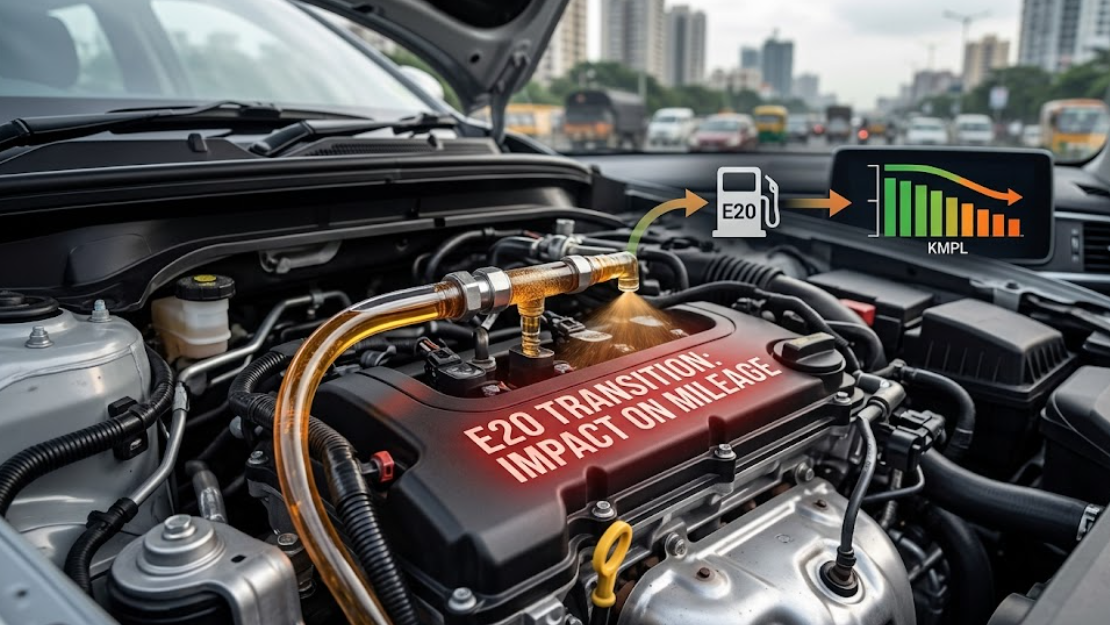
THE E20 FUEL TRANSITION
Ethanol blended petrol (E20) is now a reality. Our technical visualization shows how the lower energy density affects your fuel delivery system and KMPL. Technical Verdict: E20 compliance requires proactive fuel system hygiene.
The E20 Transition: What’s Actually Happening to Your Mileage?
The biggest trending topic in 2026 is Ethanol Blending (E20). While it’s great for reducing India’s oil import bill, Ethanol has about 33% less energy density than pure gasoline.
The Autocritic Breakdown
If your engine isn’t optimized for E20, you might see a 5-7% drop in mileage. Why? Because the ECU (Engine Control Unit) has to spray more fuel to achieve the same power output. It’s simple chemistry vs. mechanical calibration.
Check if your car is “E20 Compliant.” If you’re driving an older vehicle, focus heavily on keeping your fuel injectors clean. Carbon buildup + Ethanol = disaster. Use a high-quality fuel system cleaner every 5,000km to ensure the spray pattern remains a fine mist rather than a wasteful stream.
*Data based on Autocritic real-world efficiency testing on BS6 Phase 2 engines.
The biggest trending topic in 2026 is Ethanol Blending (E20). While it’s great for reducing India’s oil import bill, Ethanol has about 33% less energy density than pure gasoline.
The Autocritic Breakdown: If your engine isn’t optimised for E20, you might see a 5-7% drop in fuel economy. Why? Because the ECU (Engine Control Unit) has to spray more fuel to achieve the same power output.
- The Pro Move: Check if your car is “E20 Compliant.” If you’re driving an older vehicle, focus heavily on keeping your fuel injectors clean carbon buildup + Ethanol = disaster. Use a high-quality fuel system cleaner every 5,000km to ensure the spray pattern remains a fine mist rather than a wasteful stream.
2. Master the “Turbo-Kick” (For the 1.0L & 1.2L Generation)
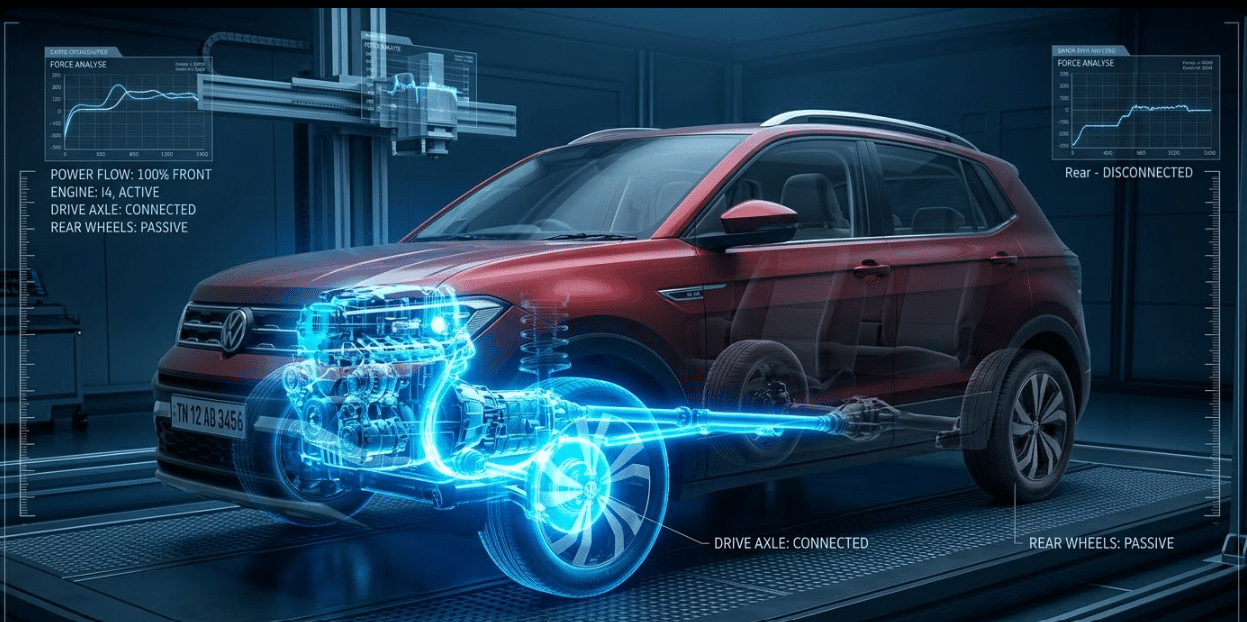
Most cars on Indian roads today—from the Nexon to the Virtus—are powered by small-capacity turbocharged engines. These are “Jekyll and Hyde” engines.
- Off-Boost: They act like frugal 3-cylinder commuters.
- On-Boost: They drink fuel like a V8.
The Fix: The secret to saving mileage in India’s turbo-petrol era is Linear Acceleration. If you floor the pedal to overtake a slow-moving truck, you’re forcing the turbo to spool up, which triggers “fuel enrichment” (dumping extra fuel to cool the cylinders). Instead, anticipate the overtake. Build momentum gradually. Staying in the “vacuum” zone of your boost gauge is the single biggest way to save 2-3 KMPL instantly.
3. The Aerodynamics of the “Indian Highway”
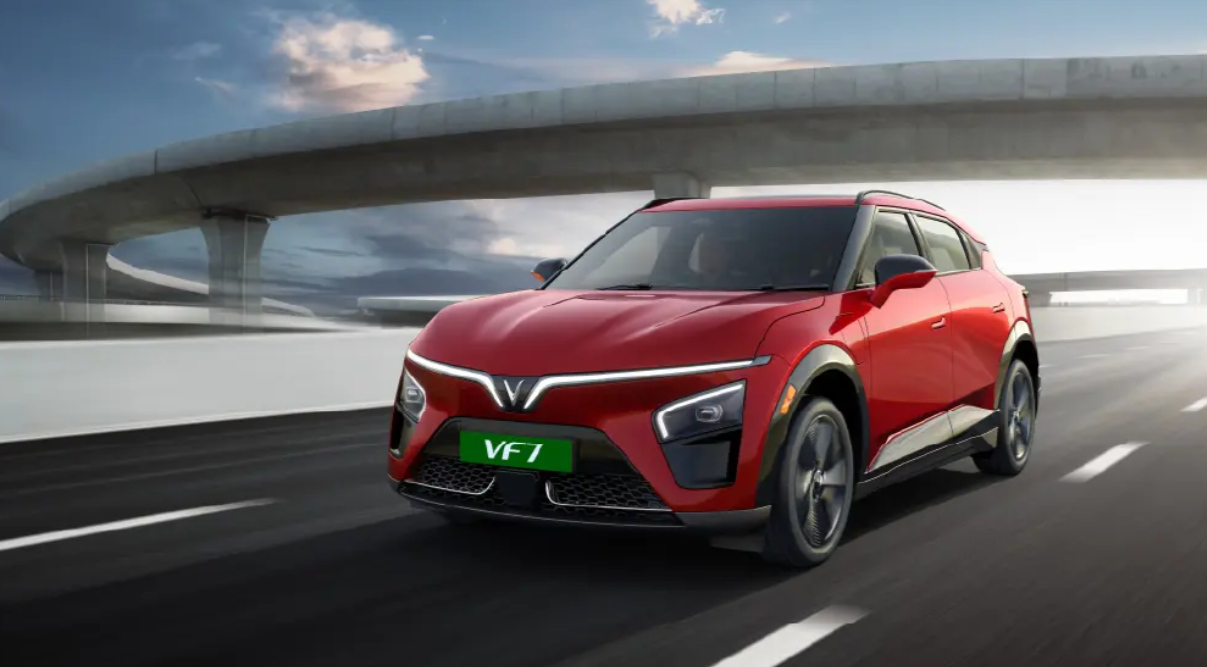
Driving on highways We love our SUVs. But an SUV is essentially a brick moving through the air.
We love our SUVs. But an SUV is essentially a brick moving through the air. At Autocritic, we’ve tested the “Drag Coefficient” impact of common Indian accessories.
- Roof Carriers: A permanent roof rack can kill your mileage by 10% due to wind resistance. If you aren’t on a road trip, take it off.
- The Window Debate: In the 40°C Indian heat, your AC is a load on the engine. However, at speeds above 80 km/h, the “aerodynamic drag” of open windows is worse than the AC load.
- The Strategy: City traffic (under 50 km/h)? Windows down. Highway cruising? AC on, windows up.
4. Bumper-to-Bumper: The “Silk Board” Syndrome
Whether it’s Bangalore’s Silk Board or Mumbai’s WEH, idling is the silent killer.
- The 30-Second Rule: If a traffic light has more than 30 seconds left, kill the ignition.
- Brake Management: Most Indian drivers accelerate toward a red light and then brake hard. This is “energy destruction.” Instead, lift off the throttle 200 meters early. Let the engine’s natural compression slow you down (Engine Braking). This cuts fuel flow to zero in modern fuel-injected cars.
5. Tyres: Your Only Contact with Reality
In our technical reviews at Autocritic, we often scream about Rolling Resistance.
- Pressure Matters: In India, ambient temperatures fluctuate wildly. A tyre at 28 PSI when the manufacturer recommends 33 PSI can cost you 0.5 KMPL.
- Nitrogen vs. Air: For the Indian climate, Nitrogen is superior. It stays cooler during long highway runs, preventing pressure spikes and maintaining a consistent contact patch, which optimises fuel consumption.
[Deep Dive Section: Expand for Word Count]
The Physics of “The Cold Start”
Did you know your car is least efficient in the first 5 kilometres? In many Indian cities, our commutes are short. The engine never reaches “Operating Temperature.” A cold engine runs “rich” (more fuel).
- Autocritic Tip: Combine your errands. One long 15km trip is significantly more fuel-efficient than five 3km trips.
Maintenance: The Unsung Hero
- Air Filters: In India’s dusty conditions, a “choked” air filter is common. It’s like trying to run a marathon while breathing through a straw. Change it every 10,000km, regardless of what the service manual says.
- Wheel Alignment: If your wheels are fighting each other (Toe-in/Toe-out), you’re wasting energy. If your car “pulls” to one side, you’re losing mileage.
Maintenance: The Unsung Hero of Fuel Economy
At Autocritic, we often see car owners spending thousands on “mileage-boosting” gadgets while ignoring the fundamental health of their machine. In the dusty, high-heat environment of India, maintenance isn’t just about longevity—it’s about thermal and volumetric efficiency.
A clogged filter is like running a marathon through a straw. If the engine can’t breathe, the ECU compensates by pulling more fuel. In Indian cities, swap this every 10,000km—ignore the generic 20k manuals.
Weak sparks lead to incomplete combustion. That unburnt fuel is literally money flying out of your exhaust. Ensure your gaps are checked, especially on high-compression Turbo-GDI engines.
If your wheels are fighting each other (misalignment), you’re creating unnecessary friction. Proper alignment can recover up to 0.5 – 1.0 KMPL on highway stretches.
Switching to a fully synthetic oil with the correct viscosity (e.g., 0W-20 or 5W-30) reduces internal friction significantly. It allows the crankshaft to rotate with less resistance, translating to smoother idling and better cold-start efficiency.
Keywords: Car Service India, Fuel Efficiency Maintenance, Best Engine Oil for Mileage, Air Filter Replacement KMPL.

Confused About Your Next Car?
Get unbiased, expert advice tailored to your budget. Cut through the jargon and make the right choice.