
If you’ve been tracking the automotive market lately, you’ve probably noticed a massive plot twist unfolding right before our eyes. For years, the narrative was clear: traditional petrol and diesel cars were on the way out, and pure electric vehicles (EVs) were going to inherit the earth overnight. EV Cars vs Hybrid: 5 Reasons Why Strong Hybrids are Selling!
But the latest sales sheets tell a completely different story.
There is an absolute, undeniable surge in Strong Hybrid Electric Vehicles (SHEVs). Buyers are flooding showrooms and waiting in long lines to get their hands on keys for hybrid SUVs and MPVs.
So, what changed? Why are hybrids suddenly the hottest ticket in town?
It’s not just a passing trend—it is a deeply logical consumer shift driven by massive technological advantages. If you want to understand the tech keeping hybrids at the top of the sales charts, here are the 5 core reasons why strong hybrids are winning the automotive war right now.
1. The Range Anxiety Killer: Infinite Infrastructure Independency
Let’s start with the most obvious technical hurdle pure EVs face: the charging grid. While public charging infrastructure is growing, it still cannot match the sheer convenience of a neighborhood fuel station.

- How the Tech Works: A strong hybrid doesn’t need to be plugged into a wall outlet. It generates its own electricity on the go through internal combustion and regenerative braking.
- The Sales Impact: Buyers get the smooth, silent performance of an electric vehicle for city commutes without the paralyzing “range anxiety” during long highway road trips. You refuel a hybrid exactly like a conventional car in under three minutes, making it completely independent of a charging grid.
2. The 25+ KMPL Club: Decoupling Engines from Axles
We can’t talk about hybrids without talking about staggering fuel efficiency numbers. Strong hybrids are routinely hitting 22 to 28 kmpl in real-world urban traffic, completely leaving standard petrol and even older diesel engines in the dust.
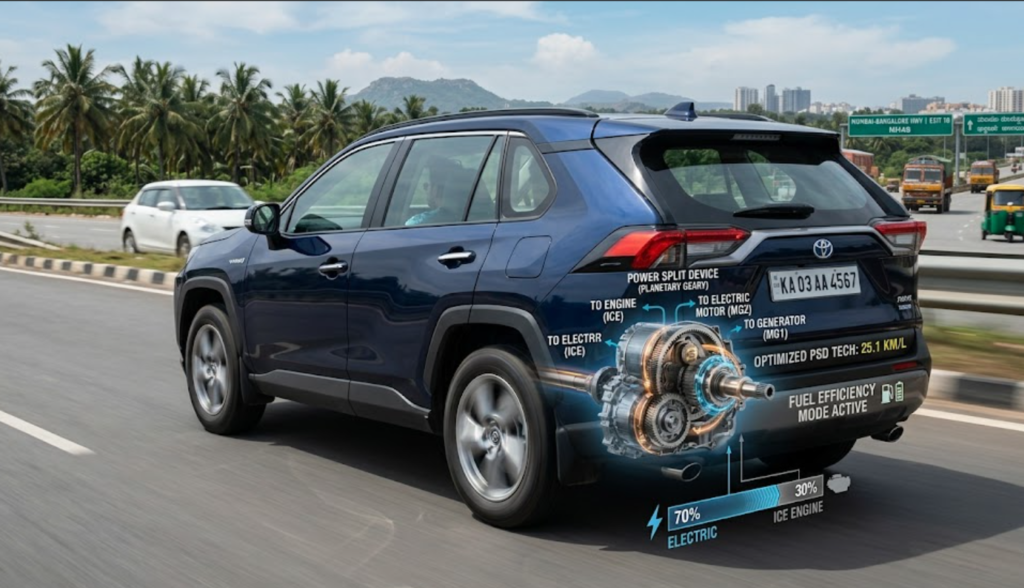
- How the Tech Works: Traditional cars use fuel heavily during stop-and-go acceleration. In a strong hybrid system, an intelligent Power Split Device (PSD) manages power distribution. When you creep forward in traffic, the petrol engine completely shuts off, and a high-torque electric motor handles the heavy lifting using energy stored in a compact battery pack.
- The Sales Impact: By using zero fuel during the least efficient driving cycles (bumper-to-bumper traffic), daily running costs drop significantly.
3. Regenerative Braking: Free Energy from Friction
Every time you step on the brakes in a standard internal combustion vehicle, kinetic energy is instantly wasted and converted into heat through the brake pads. Hybrids turn this entire dynamic on its head.
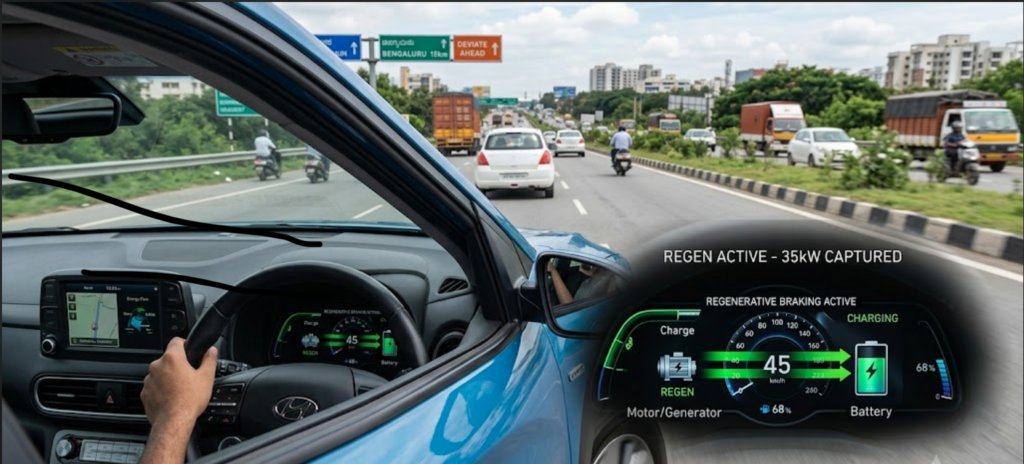
- How the Tech Works: When you lift your foot off the accelerator or apply the brakes in a hybrid, the electric motor reverses its operation to act as a generator. It captures that forward momentum, slows down the car mechanically, and channels that recycled energy straight back into the hybrid battery.
- The Sales Impact: You are essentially capturing “free” power every time you slow down. This recycled energy powers the cabin electronics and drives the car during the next acceleration cycle, ensuring maximizing efficiency without user intervention.
4. Pure Electric Driving Mode (EV Mode Clarity)
A lot of buyers confuse mild hybrids with strong hybrids. Mild hybrids simply give a tiny electrical boost to assist the engine under heavy load. Strong hybrids possess an entirely different level of capability.
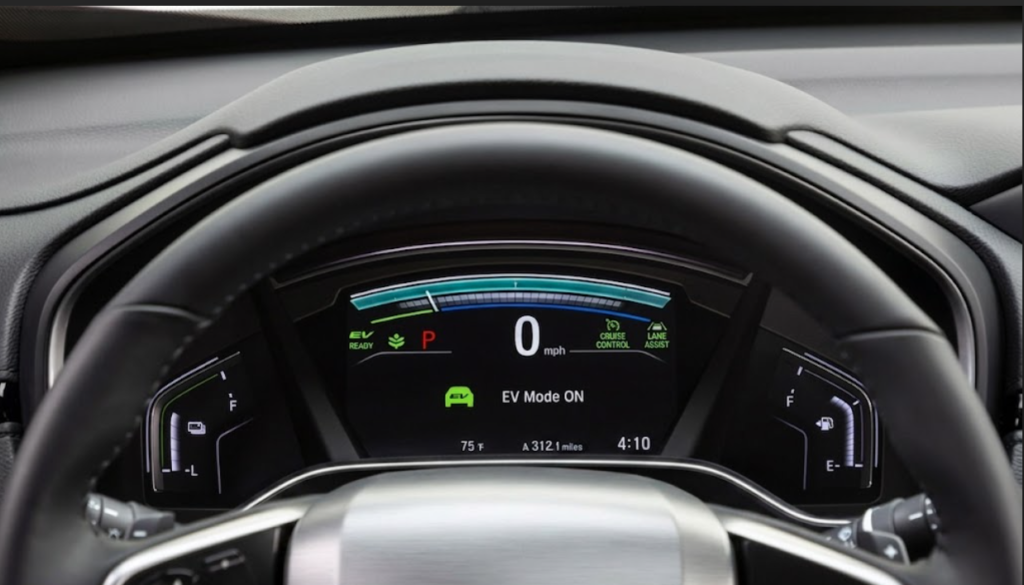
- How the Tech Works: Strong hybrids pack highly sophisticated e-CVT gearboxes and potent electric motors that can independent move the vehicle. At lower speeds (usually up to 40–50 km/h depending on battery charge), you can manually select EV Mode.
- The Sales Impact: The car functions precisely like a battery-electric vehicle. The engine remains completely silent, emitting zero emissions while maneuvering through tight parking garages or crawling through residential neighborhoods.
5. High Resale Retention & Bulletproof Reliability
The final tech push is all about long-term durability. Early skepticism surrounding battery life has been thoroughly debunked by real-world data tracking million-kilometer global hybrid fleets.
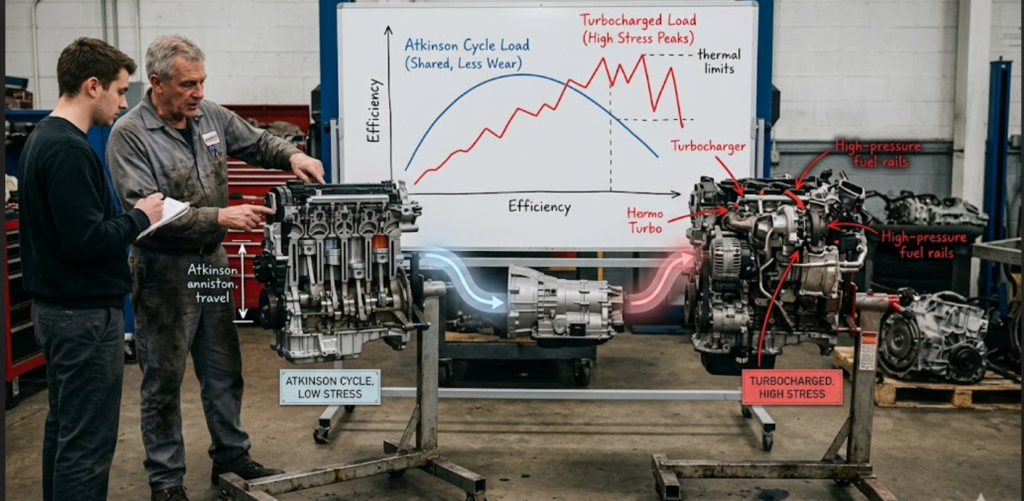
- How the Tech Works: Because the electric motor and the petrol engine constantly share the workload, neither powertrain is ever pushed to its absolute thermal or mechanical limits. The engine runs on a highly efficient Atkinson Cycle, which experiences significantly less wear and tear compared to high-stress turbocharged engines.
- The Sales Impact: Lower wear and tear equals fewer mechanical breakdowns over a ten-year ownership cycle. This structural reliability gives hybrids exceptional value retention in the used car market, making them a very safe investment for smart buyers.
AutoCritic’s Take: The Bridge We Actually Needed
The sudden rush toward hybrids isn’t an anti-EV movement; it’s a pro-practicality movement. Consumers have realized that strong hybrids offer a seamless, zero-compromise bridge toward cleaner mobility. You get the environmental benefits and fuel savings of an electric car, wrapped neatly in a package that fits your existing lifestyle perfectly.
Let’s Interact: What’s Stopping You?
If you are currently looking to buy a new car, where do you stand on this debate?
- Are you ready to make the jump to a Strong Hybrid for that sweet 25+ kmpl mileage?
- Or are you holding out until pure EV charging infrastructure becomes completely seamless across highways?
Drop your thoughts in the comments below, and let’s discuss! Don’t forget to share this breakdown with anyone currently confused about their next garage upgrade.

Confused About Your Next Car?
Get unbiased, expert advice tailored to your budget. Cut through the jargon and make the right choice.